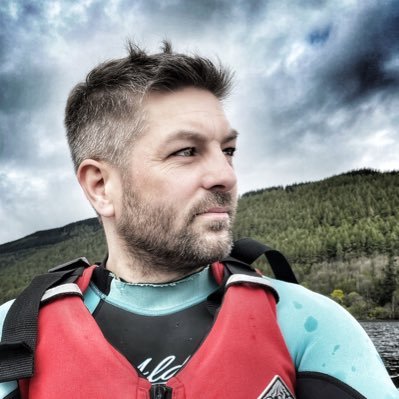
On adventure, curiosity and purpose, with Matt Pycroft

Somewhere on the vertical rock face of Mount Roraima, filmmaker Matt Pycroft radioed down to say he wasn’t comfortable. His climbing partner thought he’d gone soft. Matt knew the calculus had shifted: ego versus survival. One decision reshaped how he directs expeditions for National Geographic.

The podcast

Follow the adventure.

For authentic stories of adventure, exploration & the natural world.

Somewhere on the vertical rock face of Mount Roraima, Matt Pycroft made the radio call that probably saved his life. He was three pitches up a slime-covered flake—ancient sandstone weeping moisture and moss—when the maths stopped working. The gear placements felt dubious. The rope anchors sketchy. His climbing partner, Leo Houlding, was already higher. Matt pressed the transmit button and said the thing nobody wants to say on an expedition: “I’m not comfortable.”

Leo thought he’d gone soft. Matt knew better. The calculus had shifted from acceptable risk to something darker. He abseiled back down, leaving the summit push unfinished. Later, sitting on the portaledge at dawn—hanging tent swaying three hundred metres above Guyana’s rainforest—he realised the decision had reshaped everything he thought about leadership, ego, and what it means to direct an expedition for National Geographic.

That moment of ego-death, as Matt calls it, came years into a career that started with a skateboarding misfit from Grimsby who thought mountains were for other people. The kid who felt insecure, uncomfortable in his own skin. Then at sixteen, someone handed him a place on a three-week Outward Bound course in Scotland. Three weeks of rain, ridges, and sleeping under tarps. Three weeks that shattered every limiting belief he’d carried.

Outward Bound—founded in 1941 to build resilience through outdoor education—had a simple premise: put young people in wild places and see what happens. For Matt, what happened was clarity. He came off that course knowing two things: he wanted to work outdoors, and he wanted to tell stories about it. The first part took him into outdoor education and guiding. The second part took longer to land.

By 2014, Matt had founded Coldhouse Collective, a production company built on an unconventional model. Instead of chasing sponsors for existing projects, he pitched stories that served both adventure narratives and brand marketing goals. “Brand-first” filmmaking, he calls it. The approach worked. Within a decade, Coldhouse was directing flagship series for National Geographic—Arctic Ascent with Alex Honnold, Limitless with Chris Hemsworth—and producing documentaries for Netflix.

But the work that sticks with him often happens far from the screen. Like the fifty-three-kilometre trek through Guyana’s rainforest to reach the base camp of Mount Roraima, a tabletop mountain rising two thousand eight hundred metres above the jungle. Or the rhino translocations in Kenya, where the story isn’t the helicopter or the sedative dart—it’s the minute-by-minute care of a three-tonne animal being moved to safer ground. Matt’s cinematic eye doesn’t hunt for spectacle. It waits for the moment that reveals why a place, or a creature, or a decision matters.

Leo thinking I’m soft is better than me dying.

— Matt Pycroft, on the radio call from Mount Roraima

That radio call—the one where he backed down—became a turning point not just in how Matt climbs, but in how he leads film crews into remote, high-consequence environments. Trusting your instincts, he says, isn’t about fear. It’s about calibration. Knowing when the risk serves the story and when it just serves your ego. The distinction matters when you’re rigging ropes on a slime-covered tepui or deciding whether to push a shoot into worsening weather.

What surprised him most about transitioning from adventurer to director was how much ego he had to shed. Early on, he thought leadership meant having all the answers, never showing doubt. Now he knows it means saying “I don’t know” out loud, assembling people smarter than you, and getting out of their way. The best expeditions, he’s learnt, are collaborations where everyone’s voice carries weight—not because it’s democratic, but because survival and storytelling both depend on it.

Matt’s films carry a quiet mission threaded through every frame: you won’t protect what you don’t love. Environmental stewardship, he believes, doesn’t start with policy or protest. It starts with wonder. With seeing a place—or a species—so clearly that its loss becomes unthinkable. That’s why he commits one per cent of Coldhouse’s turnover to vetted environmental charities through One Percent for the Planet. It’s why he advocates for the right to roam, whether in Scotland’s Highlands or a forgotten footpath in your town.

He also pushes back hard against the idea that adventure requires a passport, sponsorship, or a film crew. Adventure, he insists, is a mindset—not an activity. It’s a walk with an unknown outcome. It could be wild camping on a Scottish peak or noticing the first daffodil cracking through pavement on your street. The extraordinary, he says, lives everywhere. Most of us just walk past it.

In this conversation.

We hear how a three-week Outward Bound course in Scotland broke open Matt’s sense of what was possible, and how that experience still shapes the way he approaches risk and uncertainty today. The conversation goes into the mechanics of running Coldhouse Collective—pitching stories that serve both narrative and brand, the ethics of sponsored content, and what it takes to direct expeditions where the stakes are measured in lives, not just footage. Matt walks us through the decision to back down from that dubious rope flake on Mount Roraima, and what ego-death taught him about leadership. We also talk about redefining adventure as something accessible on your doorstep, the right to roam, and why slowing down to notice five new things on a familiar walk might be the most radical thing you do this year.

Call to adventure.

Find an untrodden path near home—a forgotten footpath in your town, a city park at dawn, a woodland edge you’ve always driven past. Walk it slowly. Notice what you’ve never seen: the crack of daffodils through pavement, the distant birdcall, the patch of sky framed by rooftops. If your heart still yearns for more after that, plan a true expedition—be it Wadi Rum’s red dunes or a kayak trip along Scotland’s coast—and take the first step without waiting for permission.

Pay it forward.

Join One Percent for the Planet and pledge one per cent of your income—personal or business—to vetted environmental nonprofits working to protect the places we film, climb, and love. Or pick up The Book of Trespass by Nick Hayes to understand why public access is your right, not a privilege. Then go civilly trespass for the sake of stewardship—because you can’t protect what you’ve never walked on.

About Matt.

Matt Pycroft is a filmmaker, photographer, and founder of Coldhouse Collective—a production company directing expeditions and documentaries for National Geographic, Netflix, and global brands. He’s spent time rigging ropes on the vertical faces of Mount Roraima’s tepui, documenting rhino translocations in Kenya, and directing flagship series like Arctic Ascent with Alex Honnold. Before the cameras, he was a somewhat insecure skateboarder from Grimsby whose world cracked open on a three-week Outward Bound course in Scotland at sixteen.

The slime-covered flake is still up there on Mount Roraima. So is the portaledge where Matt sat at dawn, watching the sun lift over Guyana’s rainforest, knowing he’d made the right call. That moment—backing down, trusting his gut, choosing survival over summit—didn’t end the expedition. It redefined what success looked like. Press play.

The letter

Start your next adventure.

Authentic stories of adventure, exploration and the natural world. To inspire your next adventure.

No spam. Unsubscribe anytime.

· More episodes

Other conversations.

  • Tenth walking shark catalogued in Papua New Guinea’s coastal shallows.

    Tenth walking shark catalogued in Papua New Guinea’s coastal shallows.

    A walking shark swimming across seagrass and coral reefs has been named from Milne Bay; Brazil’s yearlong campaign has cut new mining scars across Yanomami land by 99 per cent; and poachers in Naples are stripping entire sea-urchin colonies in single nocturnal raids, leaving predators with nothing to hunt.

    Read

  • Mount Everest summits surge past 900 as mangrove forests stage global comeback.

    Mount Everest summits surge past 900 as mangrove forests stage global comeback.

    More than 900 climbers reached Everest’s summit in 2026 amid unusually stable weather, while satellite data reveals mangrove forests rebounding worldwide after decades of decline. Wildlife responds to human presence across 37 species, a coronal mass ejection may brush Earth tomorrow, and scientists document 24 new marine species in the South Atlantic’s midwater zone.

    Read

  • A rare crown, and a squid in the dark.

    A rare crown, and a squid in the dark.

    Five stories this week, drawn from adventure, exploration, conservation and the natural world. A climber completes a rare set of summits. A giant squid is found off Australia without anyone laying eyes on it. And in the Cairngorms, a wildcat written off only a few years ago is raising kittens in the wild.

    Read