Four grey walls. A desk. The only thing to look forward to: two weeks somewhere else, every year. Georgia Barker sat in her accountancy office in Essex reading an Instagram meme that asked, “What if your only joy is a holiday?” The question hit hard. She looked around the room. She thought about the years ahead. Within weeks she’d booked a one-way ticket to Australia.
Georgia grew up on a goat farm in Essex — though not, she’s quick to say, because her family loved nature. Her father had bought green-belt land and needed livestock to build a house. So there were 150 goats, a cat that hated her, 15 rabbits, and a goat called Fat Boy Slim that she walked on a lead. She loved animals, but never dreamed of working with them. She studied accountancy, sat in offices, and looked at spreadsheets.
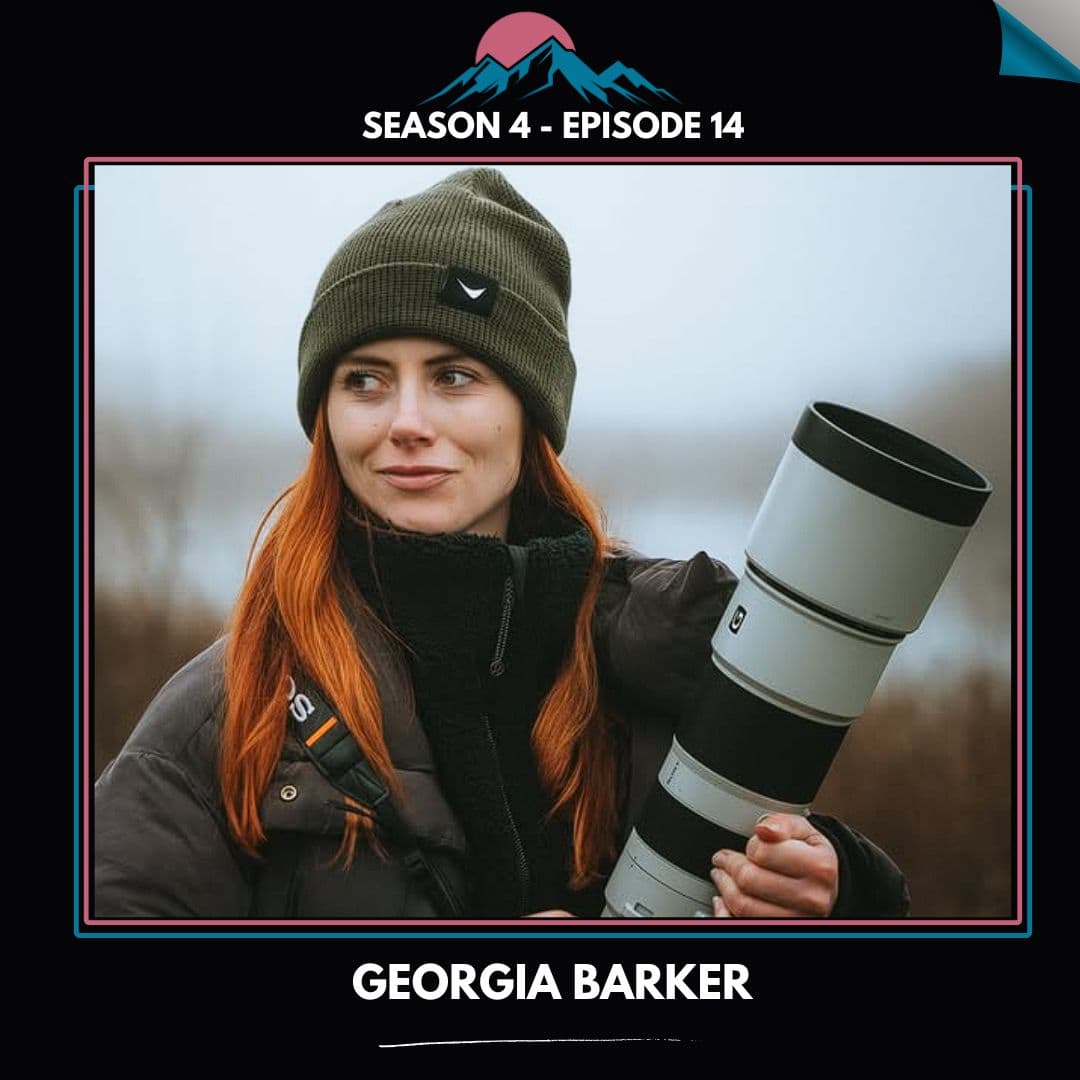
Now she’s a self-taught wildlife photographer and storyteller known online as Nature with Georgia — on a mission to make birdwatching cool. She runs free community nature walks, shoots documentary-style films for YouTube, and has built a passionate following by photographing British birds with honesty, humour and no pretence. She’s learning as she goes, and that’s the point.
Seven years on the move.
The one-way ticket turned into seven years. Georgia backpacked Australia’s East Coast, worked in one of the roughest pubs in Queensland — 18 hours inland from Brisbane, serving drinks in a drive-through bottle shop — then moved to Melbourne, then travelled through Fiji, Eastern and South Africa, and finally lived two years in Canada. She rafted beneath Victoria Falls with a life jacket that looked like it came from the Titanic. She swam to Devil’s Pool on the lip of the waterfall, held only by a guide’s arm, no ropes. Her friend was hungover and the current pulled hard. She camped through seven African countries in six weeks and saw wildlife she can barely remember now, because at the time she was shooting on an iPhone and chasing adrenaline, not stillness.
Somewhere in Fiji she started a happiness project — a small notebook where strangers wrote their definition of happiness. It was an icebreaker for a solo traveller, and a way to process why she’d left in the first place. She still has the book. She reads it sometimes. But towards the end of those seven years she noticed something uncomfortable: when everything is temporary, you start treating people like they’re temporary too. You stop investing. You drift. So she came home.
The hide that changed everything.
Back in the UK, Georgia had been donating to the RSPB for two years but didn’t really know what they did. One day, bored, she and her boyfriend visited RSPB Fen Drayton near Cambridge. She walked into a bird hide for the first time in her life. In a hide you are forced to slow down and pay attention. She looked around and noticed birds — really noticed them — and felt something strange: were these here all this time? She bought a camera. She started learning settings by trial and error, no courses, no mentor. She typed “what lens do I need for wildlife” into Google and bought one. She sat in hides for hours in the cold waiting for barn owls and tawny owls. She missed thousands of shots. She loved it.
I’d never sat in a hide before in my life. And in a hide, you are forced to slow down and pay attention.
— Georgia Barker
Making birdwatching cool.
She started Nature with Georgia on Instagram a year ago. The birding community welcomed her — strangers in reserves eager to share what they’d seen, protective of sensitive locations for the right reasons, but open and kind. She met a friend at a reserve who’s been birding his whole life; he became her guide. She ran two free nature walks and loved the feeling of bringing people together. She wants to offer experiences for every budget — from free local meetups to affordable camping safaris, not just the ten-thousand-pound trips. She’s working a full-time customer service job and building YouTube documentaries in her spare time. She’s transparent about what she doesn’t know. People ask her technical questions and she says, “I don’t know what you’re going on about — I just work it out.” She loves pigeons and wants to write a guide to doves because everyone dismisses them. She dreams of being on Springwatch.
In this conversation.
We hear how an Instagram meme ended an office career, how Georgia spent seven years travelling from Australia to Africa to Canada, how she sat in a bird hide for the first time and had an epiphany, how she taught herself wildlife photography by failing thousands of times, and how she’s now building a community around British birds — with honesty, no hype, and a mission to make birdwatching cool again.
Call to adventure.
Strip it back. Make it simple. There is wildlife all around you. Go to your local park, sit down, and pay attention. You don’t need binoculars or a big lens — just use your ears and your eyes. It doesn’t need to be a weekend or take a lot of time. Slow down. Notice what’s been there all along.
Pay it forward.
Georgia supports the RSPB — the Royal Society for the Protection of Birds. She recommends visiting nature reserves, donating, or taking out a membership for free parking and access across the UK. The RSPB runs conservation projects, raises awareness, and protects British birdlife.
About Georgia.
Georgia Barker grew up on a goat farm in Essex, studied accountancy, then spent seven years travelling the world before returning to the UK. She’s a self-taught wildlife photographer known online as Nature with Georgia. She picked up a camera a year ago, learned by trial and error, and now creates documentary-style films and runs free community nature walks. She’s passionate about making birdwatching accessible, transparent about what she’s still learning, and committed to bringing people together around British wildlife.
She still thinks about that Instagram meme sometimes — the one about only looking forward to a two-week holiday. She’s not looking around four walls anymore. She’s in a hide at dawn, waiting for a barn owl, missing shots, loving every cold, patient, unpredictable minute of it.