The temperature climbs to nearly 50 degrees Celsius. He stands on the plateau above the Zambezi gorge, half his water gone, his GPS broken in the heat, his bearing lost in the thorn scrub for the hundredth time. Below him, the river he cannot reach. Around him, rocks and heat and the knowledge that at one or two miles a day through that 150-mile gorge, his food will never last. He activates the SOS. Nobody comes. Hours pass. Eventually, he drinks his own urine and climbs down a cliff he had already dismissed as impossible.
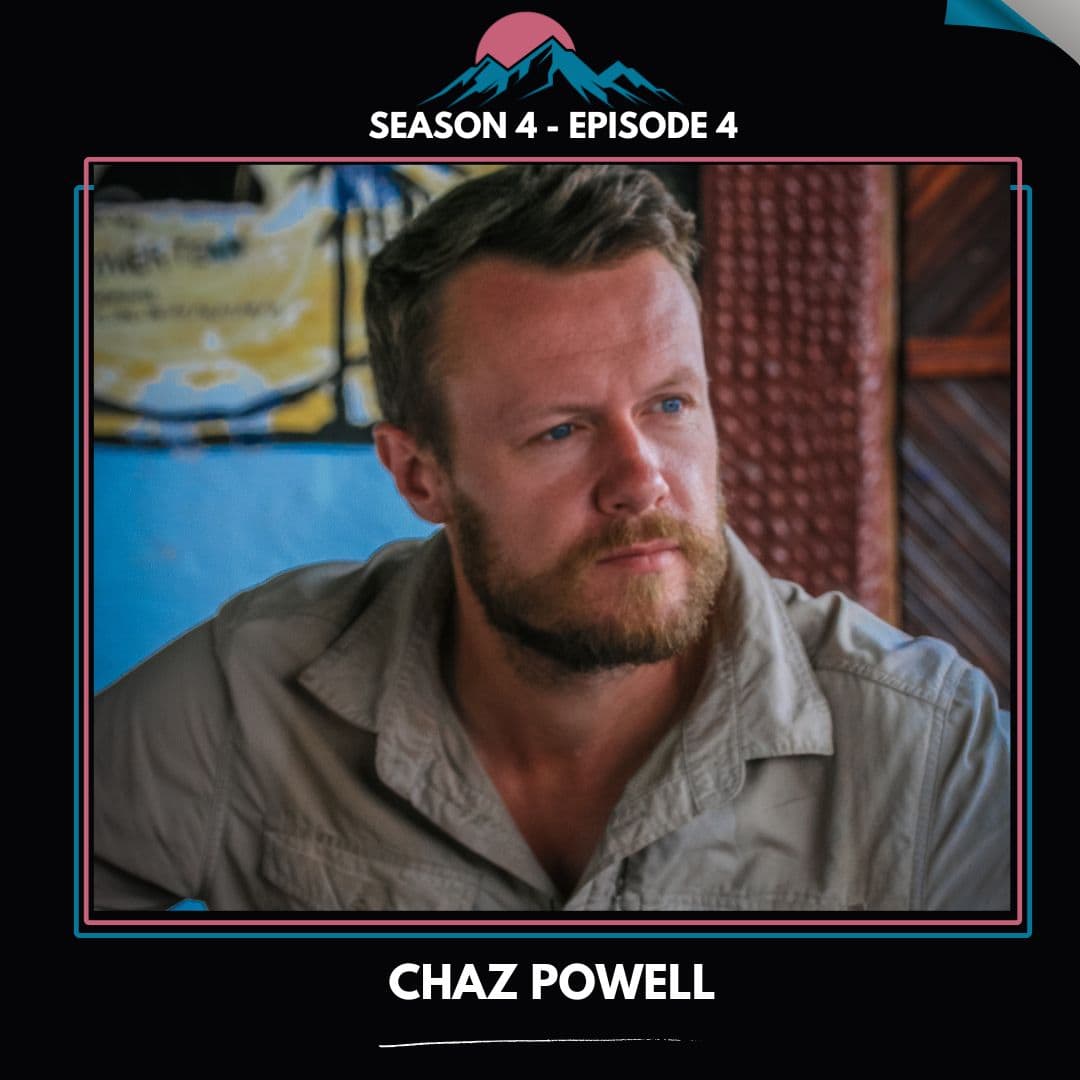
Chaz Powell grew up in Newport, a small market town in Shropshire, building dens with his mates and daydreaming through lessons. His father took him camping in the woods nearby and left an imprint that would outlast everything else. By 19, Powell had ended up in a young offenders’ institution — something he has carried quietly ever since. Travel, at first, was simply about getting away.
Today he is a Fellow of the Royal Geographical Society, named Explorer of the Year in 2021, and the man who has walked the length of some of the wildest rivers in Africa — the Zambezi, the Gambia, the Mangoky in Madagascar — often the first person ever to do so. He now works as a ranger in Scotland, lives with his wife and young son, and continues to find unwalked rivers closer to home.
The wildest journey.
Powell set out in 2016 to walk the Zambezi from source to sea — 3,000 kilometres over 137 days, split across two years. The river unfolds in chapters: a vast floodplain submerged most of the year, the plunge through Victoria Falls into a 150-mile gorge, and the lower section through Mozambique, where a civil war forced him to stop and restart five months later. He timed his departure for the hottest season so he could walk the floodplain when it was only waist-deep. Once through, the gorge nearly killed him. After climbing out and losing his way in the heat, he sheltered in shade, activated his satellite phone, and waited. When no rescue came, he climbed down and found the water again — the closest he has come to dying.
Hospitality and hostility.
In rural Zambia, village hospitality was extraordinary. Powell would arrive to find children watching from a distance, would explain himself to a teacher, ask permission from the headman, and be given a classroom floor to sleep on, hot water for a bath, and food. In Mozambique it was the opposite. The ceasefire from the civil war was fresh and temperamental. One day, after sitting for hours trying to gain permission to pass through a village, the crowd around him grew hostile. He was grabbed, dragged across the ground, kicked, and thrown into a hut. Days later he got out. After that, every substantial village in Mozambique felt like it could happen again. He kept moving. By the time he reached the ocean in September 2017, two days after his birthday, he had overstayed his visa and was too frightened to renew it anywhere but the airport, where an official took cash from inside his passport and stamped it without a word.
Lions, bandits, and a noose in the sand.
In 2019, Powell walked the Gambia River with a friend — 1,200 kilometres over 47 days, the first people known to have done it. The central section crossed Niokolo-Koba National Park, home to one of the highest concentrations of lions in West Africa and officially closed to foot traffic. Through contacts at the African Wildlife Foundation, Powell met a gold mining businessman who produced the permits and arranged armed rangers within half an hour. Twice they encountered lions. Each time the rangers raised their hands and waited until the animal moved on. Later that year, Powell crossed Madagascar following the Mangoky River — 800 kilometres in 29 days. The central plateau was controlled by Dahalo bandits. Powell and his small team hired protection who pointed out warnings drawn in the sand: a head inside a noose. For two and a half weeks they had no communication with the outside world. Search parties went looking. They crossed rivers chest-deep with bags overhead, avoided bandit camps, and kept their heads down until they reached safety.
If you keep going forward, away from whatever is behind you — that’s what I always say to people too. If they’re in a bad situation, just keep moving away from it. Forward, forward, forward.
— Chaz Powell
In this conversation.
We hear how Powell went from a troubled youth in Shropshire to becoming an expedition leader through teaching bushcraft and guiding student expeditions. We follow him into the Zambezi gorge, through the villages of rural Zambia where he was given food and shelter, and into Mozambique where he was kidnapped. We walk with him through lion territory in The Gambia, past bandit warnings in Madagascar, and across deforested plateaus where 96 per cent of the population relies on charcoal. We learn why he chose rivers as his subject, how he navigated with a broken GPS and the help of local guides, and why the Congo remains the wildest journey left in his mind. We also hear about the recent walk he completed along the River Tay in Scotland, undertaken in memory of his father who passed away this year from prostate cancer.
Call to adventure.
Find a river near where you live that does not have a designated path. Not the Thames or the Severn — something less walked, something local. Get a map, find the source, and follow it to wherever it ends. It might only take a few days. Pack a backpack, some sardines and spaghetti, and go. Do something that, as far as you know, no one else has done. Find something unique to yourself that interests you, and try not to follow everyone else.
Pay it forward.
Powell’s father passed away this year from prostate cancer. He would like to raise awareness for prostate cancer research and the charities working on it — a cause that has affected him deeply and one he had never thought much about until now.
About Chaz.
Chaz Powell FRGS is an expedition leader and explorer who has walked the length of the Zambezi, the Gambia, and the Mangoky rivers, often as the first person to do so. Named Royal Geographical Society Explorer of the Year in 2021, he spent five years teaching bushcraft and leading expeditions before the pandemic, and now works as a ranger in Scotland. He lives off-grid with his wife and young son, and continues to seek out unwalked rivers closer to home. You can follow his work on Instagram at @thewildestjourney and @chaz_powell.
The gorge is behind him now, and the ocean ahead, and the heat that nearly killed him is just another chapter in a river that began as a trickle and will end by disappearing into something larger. Rivers, he says, are like a life: you start as something small, you grow, and then you flow out and vanish. Everything relies on them. And if you follow one long enough, it will take you somewhere you did not expect.