The frame crashes into the back of his head again. Oscar stumbles, catches himself, adjusts the unwieldy birchwood skeleton strapped to his shoulders. It rocks with every step — two and a half metres of folded Klepper kayak, jutting above him like a sail through the forest. Ben moves ahead, slower but steadier, carrying the canvas skin and ribs in an actual rucksack. The portage was supposed to be a hundred kilometres at most. They are now 200 kilometres in, climbing a waterless mountain range in one of the most remote corners of Madagascar, and the river they came to paddle is somewhere far below.
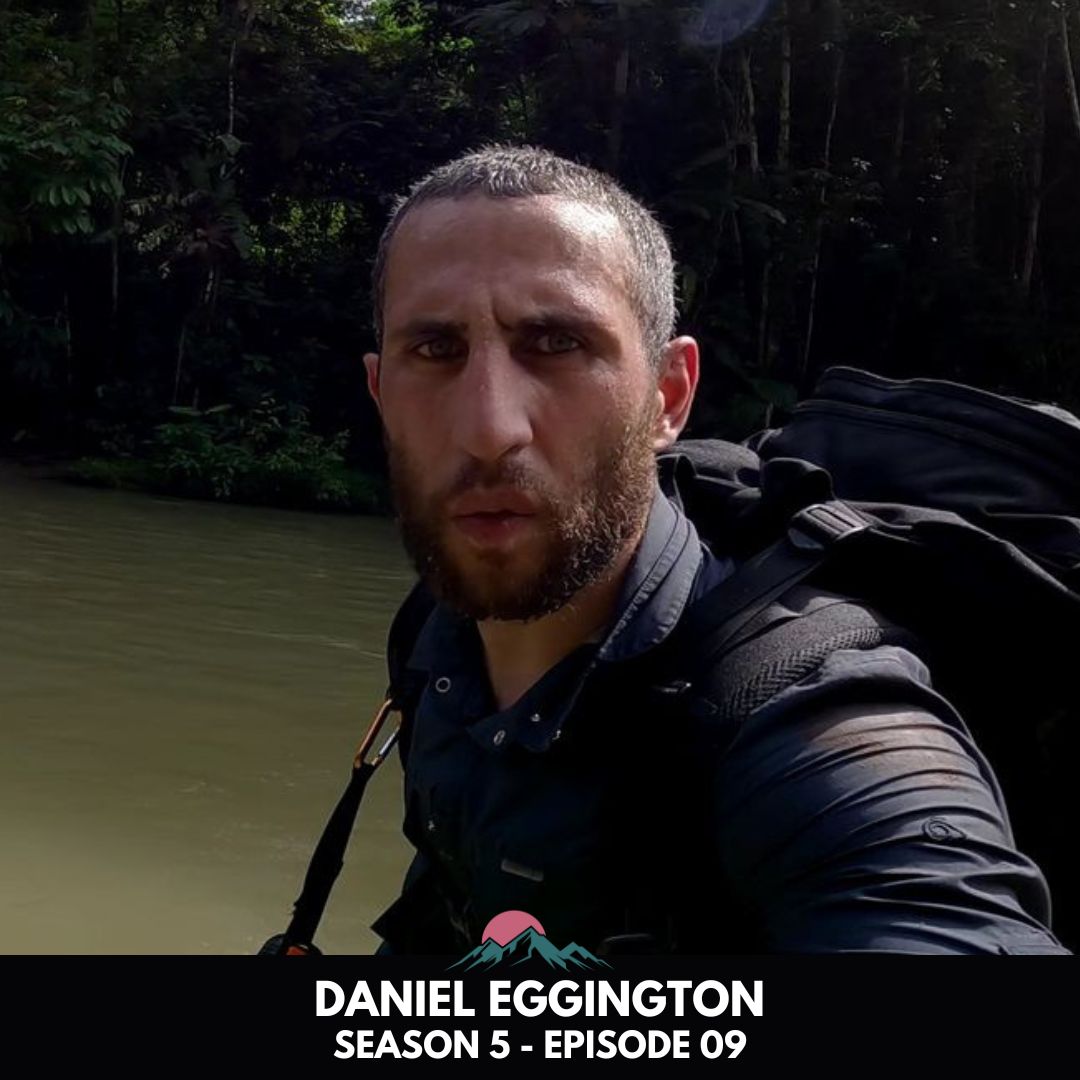
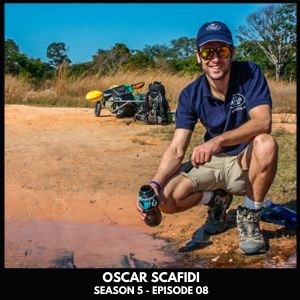
Oscar Scafidi grew up between Italy and the UK, won a scholarship to a school in south-east England, and thought he wanted advertising. The agencies in London disagreed. At 21, with no experience beyond western Europe, he saw a teaching post in Sudan on a university noticeboard and took it. That chance encounter — a Sudanese stranger on a British Airways flight extolling the virtues of Khartoum — set the course. Oscar has since lived and worked in 36 African countries, taught history in Angola, Madagascar and Ethiopia, and spent five years writing travel guides to the continent for Bradt.
Today he writes about Africa, teaches secondary school history in Addis Ababa, and undertakes long-distance river expeditions in places most guidebooks advise against. In 2022, he and his friend Ben completed the first documented descent of Madagascar’s Mangoky River — all 750 kilometres of it, from an unmarked source in the highlands to the Mozambique Channel, in a century-old German folding kayak.
A river with no agreed source.
Unlike the Kwanza in Angola — Oscar’s first river expedition in 2016 — the Mangoky has no universally agreed starting point. No Wikipedia entry, no GPS coordinates, no signpost. The reason is partly a lack of interest from the hydrological community, partly the cost and difficulty of conducting research in such a remote area. Oscar and Ben relied on oblique references in French hydrological reports, a mountain range, and local advice. They lived in Madagascar between 2017 and 2019, which gave them the networks, the language, and the bureaucratic understanding to attempt it. Oscar contacted adventure travel companies on the ground as early as 2017. Most declined. One — Remote River Expeditions, run by an American named Gary Lear — said maybe. The email chain ran for five years before they entered the country in 2022.
The Klepper.
The kayak is a Klepper Aerius II — a German collapsible design that has barely changed since the early 1900s. Birchwood frame, canvas skin, 5.45 metres long, 40 kilograms total. It can carry over 350 kilograms of gear and reach a respectable top speed. Packrafts were ruled out early: too slow, too fragile, and crocodiles were in the equation. On the Angola expedition in 2016, Oscar had used an antique Klepper from 1960. For Madagascar, the company made him a brand ambassador and provided a new model. During the portage, the skeleton breaks into ribs and two main frame sections. Ben carried the skin and ribs in a rucksack. Oscar carried the unwieldy frame sections, folded but still over two metres tall, crashing into trees and falling on his head.
I was walking along at about 2.4 to 2.6 metres tall, with the frame rocking as I walked, crashing into things in the forest, falling over and having it hit me in the back of the head.
— Oscar Scafidi
When the worst case gets worse.
The portage was never supposed to reach 200 kilometres. Worst-case satellite analysis suggested a hundred at most. But once on the ground, after trying to tackle the upper sections and consulting with Max — their Malagasy guide — the original route fell apart. Max delivered the news: the new route would mean 200 to 250 kilometres on foot, much of it over mountains with no water. They carried Water-to-Go filtration bottles and drank from the river when they could, but heading into waterless terrain they would have run out had their local guides not possessed an uncanny ability to read the topography and find groundwater. Ben, over six foot and struggling with lower back pain in the cramped kayak, initially preferred the portage. Oscar, smaller and desperate to paddle, found every kilometre on foot a frustration. Their best portage day covered 45 kilometres — the same distance as their best paddling day, but infinitely harder on the body.
Crocodile Canyon and the delta maze.
One of the portage sections was specifically on Max’s advice. He did not want them paddling through a steep gorge the locals called Crocodile Canyon. The Mangoky has large crocodiles and multiple recorded fatalities, though poaching by poor riverside communities — who lack other sources of protein — means most of what they saw were relatively small. They camped 10 to 20 metres back from the water’s edge, kept the fire between them and the river, never approached the bank in the dark. In the delta, crocodiles were a bigger concern — unlimited fish, bigger specimens, shallow braided channels. Max appeared by boat on the final morning, having navigated through the night asking communities if they had seen two foreigners in a red kayak. He was concerned about bull sharks, but especially about crocodiles. He brought a local captain and an outboard engine to make noise in the water as Oscar and Ben paddled the final stretch to the Mozambique Channel.
In this conversation.
We hear how Oscar moved from a failed career in advertising to teaching in Sudan at 21, how a stranger on a flight to Khartoum set him on a path across 36 African countries, and how five years of emails and on-the-ground research led to the first descent of Madagascar’s longest river. We hear about the Klepper folding kayak — a German design over a century old — and why it beats a packraft when crocodiles are involved. We hear about 200 kilometres of unplanned portage, water sources found by guides who read the land, and bilharzia contracted through the skin. We hear about lemurs, pirogues, the warmth of Malagasy communities, and the challenge of explaining to villagers why anyone would choose to do this. And we hear about the ending: a surprise appearance by Max in the delta, a six-hour speedboat ride north, and an unplanned feast at a French resort on the coast.
Call to adventure.
Oscar’s challenge is simple: visit Angola. Visa on arrival for almost every nationality now, cheaper than it used to be, easier than ever. Congo Basin rainforest in the north, the Namib Desert in the south, some of the best surf in the world on the Atlantic coast. He lived there for five years and considers it one of his favourite countries in Africa. Most people write it off. He asks you not to.
Pay it forward.
Oscar raised around $5,000 during the expedition for Our Kids, Our Future Madagascar — a grassroots charity that pays primary school fees and provides basic materials like notebooks so children from poor communities can return to education. No middleman, efficient, cheap. He is donating 25 per cent of the profits from his book, Kayak the Mangoky, to the same organisation.
About Oscar.
Oscar Scafidi is a travel writer, secondary school history teacher, and expedition kayaker. He has lived and worked in 36 countries across Africa, writes travel guides for Bradt, and is based in Addis Ababa, Ethiopia. In 2016 he completed the first descent of Angola’s Kwanza River. In 2022 he and Ben completed the first documented descent of Madagascar’s 750-kilometre Mangoky River. His book about the Madagascar expedition is available as an e-book on Amazon, with the paperback due imminently. His documentary films and travel content can be found on his YouTube channel, Scafidi Travels, and the full expedition details — tracking map, kit list — are at kayakthemangoky.com.
Somewhere on the coast at Belo sur Mer, after a month without a shower, Oscar and Ben stepped off a speedboat onto the beach of a smart French resort. The owner walked down, looked at them, asked where they had come from. When they explained, he clapped his hands and called all hands to action. A feast followed. Clean sheets. A shower. The frame that had hit Oscar in the head for 200 kilometres was folded away. The river was behind them. The Mozambique Channel stretched wide and blue, and for the first time in 28 days, they were not alone.