The blizzard hits without warning. Fitz and Becca are somewhere in the northern Sierra, fifty days into a trip that was supposed to last exactly that long, and now the autumn rainstorm has turned white. Snow piles fast — the kind of storm that drops three metres in a day. They’re far from any trailhead, exhausted, sick, and the phantom ringing of a mobile phone keeps sounding in Fitz’s head. There’s not much left in him. But they move.
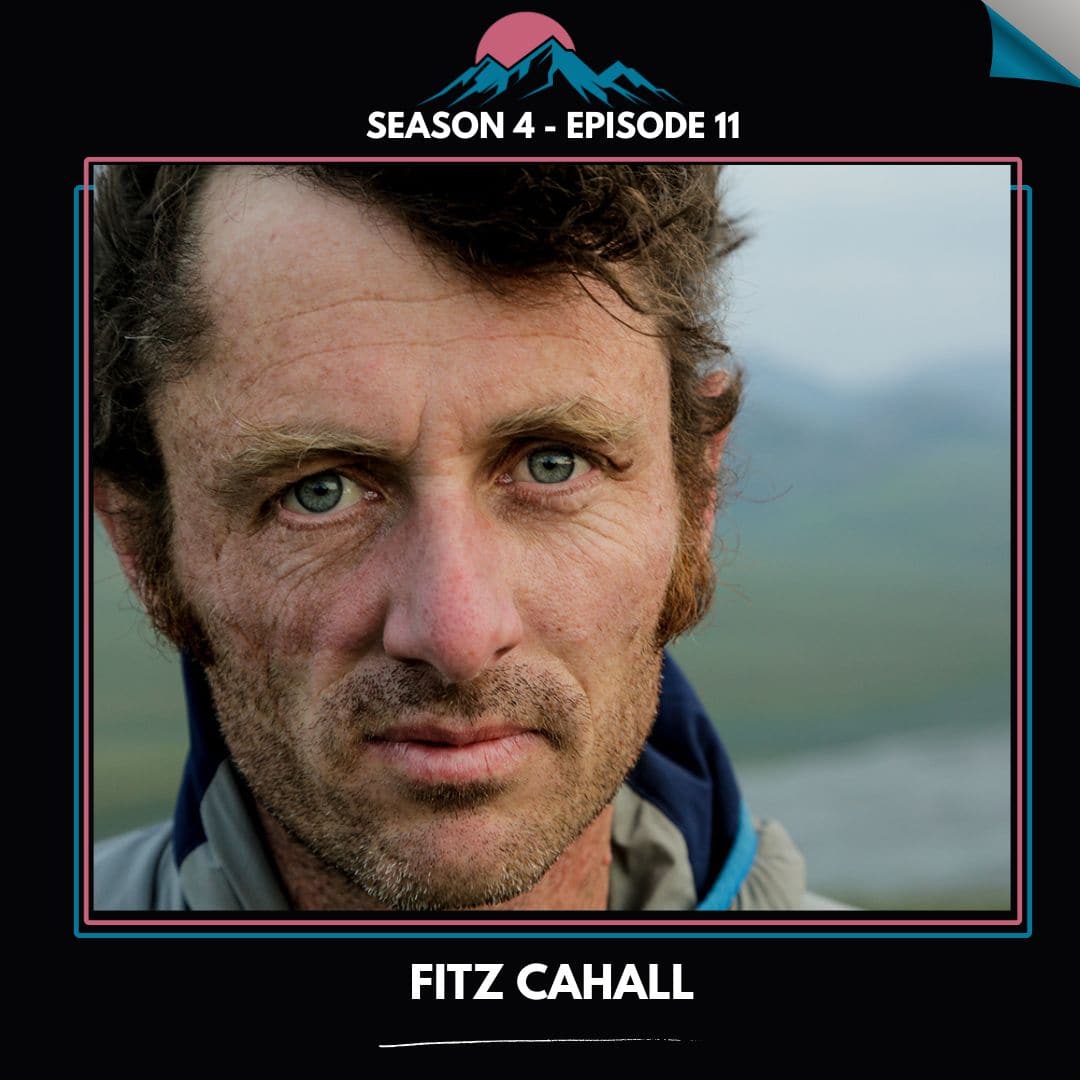
Fitz Cahall grew up all over America — California, Connecticut, a dozen towns in between — the child of two working parents, moving every few years. He spent long stretches alone, escaping into the woods or riding his bike to the far edge of whatever town they’d landed in. A childhood dog attack left him with facial scars and years of surgeries, teaching him early that status was hollow, that being himself mattered more than fitting in. The outdoors became both refuge and laboratory.
Today Fitz is a writer, climber, and the co-founder of Duct Tape Then Beer, the creative studio behind The Dirtbag Diaries — the adventure podcast he launched eighteen years ago and has shaped into nearly 400 episodes. He also co-hosts Climbing Gold with Alex Honnold. His latest project is States of Adventure, a book collecting thirty outdoor stories across climbing, paddling, skiing, hiking and more, published by Dorling Kindersley.
The day 30 became 3,000.
In 2006 Fitz was a freelance journalist covering outdoor culture. He’d had his best year yet — sold more stories than ever — and then did his taxes and realised he’d earned less money than the year before. Magazines were quietly paying less. He thought: I’m not going to be able to raise a family like this. He had stories he loved that editors wouldn’t take because the subjects weren’t famous enough. So he taught himself to code, cobbled together a podcast feed from a message board, and sent an email to thirty friends. By the end of the first day, thirty people had listened. The next day it was 300. The day after that, 3,000.
I remember that day, being like, I think I get to do this. I think a door has just opened, and I’m going to go walk through it.
— Fitz Cahall
Duct tape, then beer.
At the kitchen table with friends, trying to name the parent company that would hold the podcast and whatever else might follow, Fitz’s wife Becca teased him about his approach to problem-solving: “You’ll just deal with it with duct tape, and then you’ll drink a beer.” Someone said it had to be a process — so it became Duct Tape Then Beer. They weren’t sure anyone would take them seriously with a name like that. It turned out to be the perfect filter. People either got it or they didn’t, and the ones who did were the ones they wanted to work with anyway.
Choosing thirty.
When DK approached him about a book, Fitz had been approached before and always said no. This time felt different — eighteen years in, it was a chance to reflect. The hardest part was choosing thirty stories from nearly 400 episodes. They wanted to show the breadth of what adventure means: not just expeditions to the Himalaya, but a 13-year-old girl paddling a tiny pink kayak through the Grand Canyon‘s massive rapids, a man rollerblading 500 miles across Iowa, Marvin Sandoval becoming a world-champion burro racer in Colorado. The book had to represent a life lived outdoors through time — the wide-eyed youth, the deepening, the losses, the teaching. And it needed strong images. They landed on thirty.
In this conversation.
We hear how Fitz’s nomadic childhood and early injury taught him to value authenticity over status, how he discovered climbing at university in Seattle and knew immediately it would be his vehicle for exploration, how The Dirtbag Diaries grew from 30 listens to a global audience in three days, and why he and Becca co-own their creative studio and build space for two days a week in the mountains. We hear about the 50-day Sierra trip that became a hard reset, about facilitating his sons’ growing competence outdoors, about co-hosting Climbing Gold with Alex Honnold, and about the process of assembling States of Adventure — a book that broadens the definition of adventure and shows what a life outdoors can look like.
Call to adventure.
When an idea keeps coming back — the trip you keep thinking about, the friend you want to reconnect with, the thing you’re curious about — treat it seriously. You wouldn’t ignore a person who showed up like that. Sit down, listen, think it through. Figure out how to do it. You will not regret it. You will not reach the end of your days wishing you hadn’t taken that trip or spent time with that person or done the thing you were curious about. That’s just not how the world works.
Pay it forward.
Fitz and Becca joined 1% for the Planet early, when it was still a smaller organisation. Now it’s a global movement where businesses and individuals pledge one percent of their earnings towards conservation and climate initiatives. At the end of each year they look through the organisations and decide where to donate. It’s one of the things they’re most proud of.
About Fitz.
Fitz Cahall is a writer, climber, and the co-founder of Duct Tape Then Beer, the creative studio behind The Dirtbag Diaries and Climbing Gold. He studied journalism at university in Seattle, where he discovered climbing and the possibility of merging storytelling with the outdoor life. For eighteen years he’s been shaping how adventure stories are told, bringing voices from across the outdoor community to a global audience. He lives in the Pacific Northwest with his wife Becca and their two sons, balancing creative work with two days a week in the mountains. His book States of Adventure collects thirty stories to help you find yourself by getting lost.
Somewhere in the Sierra, in that unforecasted blizzard, Fitz and Becca made it out. The trip had been everything they hoped and nothing like they’d planned — shingles, giardia, storms, new routes, 300 miles on foot. It became the flag they planted: this is what matters, this is what a life looks like. The phantom phone stopped ringing once they were clear of the snow.