Gunshots ricocheted off the sand beside her. Megan Hine dove into a small cave in the rock face, pressed against the stone, waiting. The firing swung around above the gorge. She sprinted down, slid into the water at the bottom, climbed the smooth water-worn cliffs on the other side and reached the cave where her crew were sheltering. It was Kenya, 2017. Three armed groups — Rangers, two rival tribes — had converged in a firefight over stolen goats, and her production happened to be rigging a rope bridge right in the middle.
Megan grew up on the Malvern Hills in Worcestershire, the daughter of two geography teachers who took the family to hug rocks in the mountains every summer. She remembers cycling her father’s oversized bike to school, wondering one day if she could ride along the hilltops, then skidding out of control down the beacon with the basket dragging behind her — the biggest smile on her face. She was hooked. Through the military cadets she found rock climbing and winter mountaineering in Scotland, and a gap year in New Zealand opened her eyes to the fact that the outdoor industry could actually be a career.
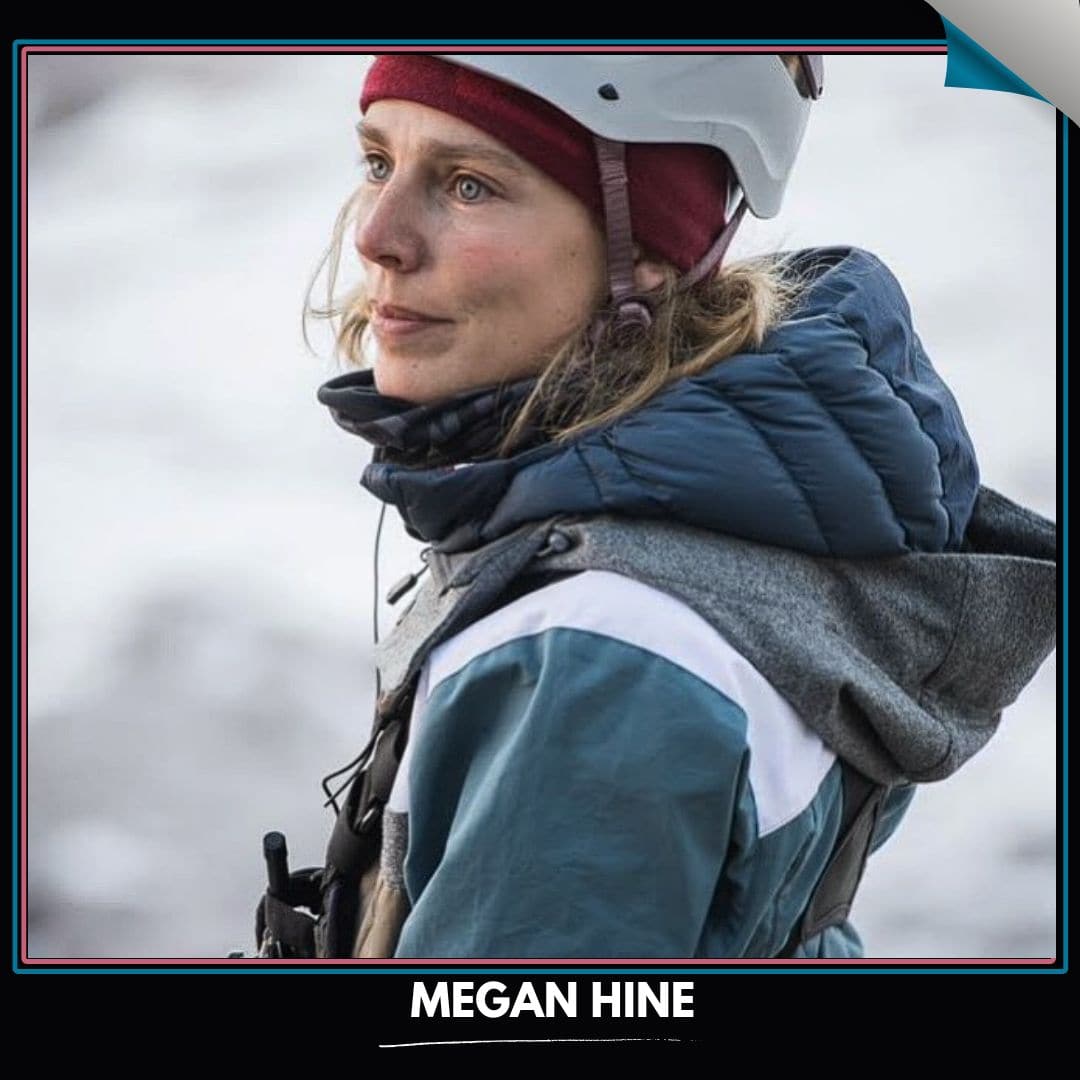
Today she is one of the most experienced wilderness safety and survival consultants working in adventure television. For two decades she has rigged the challenges, scouted the locations and kept the talent alive on some of the biggest adventure shows in the world — including multiple seasons with Bear Grylls. She is also the founder of Psych Media Solutions, a company built around making the inaccessible accessible, training the next generation of practitioners, and working only with good people in extraordinary places. She is a Scout Ambassador, author, and has just returned from six months in the field.
From bushcraft apprentice to rope rigger.
After university — three years of climbing on a student loan, as she puts it — Megan took an apprenticeship in bushcraft and survival. There were no formal qualifications in the field at the time, just organic learning with a company running expeditions to indigenous cultures: the San Bushmen, communities in Borneo. Clients would join to put skills into practice. From there she led youth expeditions in Nepal, ran an outdoor programme at a school in Switzerland, and at twenty-three was brought onto the second season of a show nobody knew would become massive. Man vs. Wild needed someone who could rig the challenges and stunts. She became that person.
I’ve literally lowered a Jeep Wrangler on a single climbing rope over an overhang — that’s how strong they are.
— Megan Hine
Risk, cameras and the perception of danger.
In the early days of adventure TV, there was no technology to paint ropes out of shots in post-production. A presenter’s storyline might say they had no rope — but Megan’s job was to keep them safe while making it look exactly as the story required. She describes it as playing with the perception of risk. Heights, ropes and extreme physical challenges read as terrifying to viewers, but once someone is attached to a properly rigged system, it is actually a sigh of relief. The real hazard is often the terrain itself — someone stumbling and twisting an ankle while trying to follow a presenter moving quickly through technical ground. Everything is tested. On large-scale productions with hundreds of crew and contestants competing for significant money, both zip lines have to be tensioned identically. The rigging is checked over and over. If her team makes a mistake, someone could lose their life.
Fixers, permits and operating in complex territories.
Scouting locations for adventure TV means research, pitch decks, ten days on the ground if the budget allows — and above all, a good local fixer. Megan describes that relationship as possibly the most important one she builds on any production. Fixers understand what the crew needs and can navigate access to landowners, government permits, and sometimes more complex parties. Filming permitting is getting tighter everywhere. A fixer’s reputation is on the line if something goes wrong. Building trust starts with curiosity and communication — asking how they operate, what the cultural norms are around gender or authority, how to work within constraints. As the shoot progresses and last-minute requests pile up, the fixer bears enormous pressure. Supporting them is essential.
Burnout, decompression and the cost of never stopping.
Just before COVID, Megan’s doctor diagnosed burnout. She is someone who finds it hard to stop. For years she managed multiple projects, moved from one environment to the next, never really had a base. She did not realise the cumulative effect of jet lag, disrupted sleep, relentless pressure and responsibility for large numbers of people. She has just come back from around six months away and spent a full week barely able to function — her brain in standby mode. It is only recently starting to power up again. She contracted Lyme disease in 2006 from a tick bite in the UK, which went into her central nervous system and took over a year to clear. She had facial paralysis for a period. The stress it put on her body likely triggered an autoimmune condition that might otherwise have arrived much later in life.
In this conversation.
We hear how Megan built her career from military cadets and a gap year in New Zealand to rigging stunts for Bear Grylls at twenty-three. We hear about the survival rule of three — three minutes without air, three hours without shelter, three days without water, three weeks without food, three months without company, three seconds without thinking — and the STOP principle: Stop, Think, Observe, Plan. We hear about leadership under pressure, managing difficult egos, building autonomy in teams, and why the hard graft of becoming a leader is invisible. We hear about scouting in remote and sometimes hostile locations, the importance of fixers, water safety, and why the human element is often more frightening than wildlife. We hear about working with A-list talent, the protective bubble she creates around them, and why after twenty years she still feels like she has only the crack of the door open in this fickle industry.
Call to adventure.
Stop procrastinating and step out of your front door. There are green spaces even in the middle of a city, and you can be in the UK countryside within thirty minutes by train. If you are interested in climbing, join a climbing wall. You do not need to go to a far-flung destination. The UK is one of the best environments in the world for accessible adventure — in Scotland you have the right to roam, in Wales you can go off into the mountains. Those dreams will stay as dreams unless you actually step out and go.
Pay it forward.
Megan is a Scout Ambassador and believes one hundred per cent in what UK Scouting does for young people and for leaders. There are so many young people on the waiting list right now. If you want access to adventure and experiences, consider becoming a volunteer Scout leader. The support is there, the opportunities are extraordinary — and they need you.
About Megan.
Megan Hine is a wilderness safety and survival consultant, expedition leader, author and founder of Psych Media Solutions. She has worked in adventure television for twenty years, including multiple seasons with Bear Grylls, and has scouted and operated in some of the most remote and complex locations on the planet. She is a Scout Ambassador and has recently been diagnosed with ADHD, which she says makes a lot of sense given her career path. She grew up on the Malvern Hills, studied Outdoor Studies at university with a year in the Czech Republic, trained as a raft guide in New Zealand, completed a bushcraft and survival apprenticeship, and ran an outdoor programme at a school in Switzerland. She is married to Josh, an anaesthetist and human performance researcher. She lives with two dogs and believes adventure and femininity are not mutually exclusive.
Somewhere in Kenya, the gunfire died down. Megan and her crew climbed out of the cave, made it downriver to the Land Cruiser, and drove back. It was a complete breakdown in communication between the local Rangers and the production — nothing to do with them at all. Just three armed groups and a rope bridge in the wrong place at the wrong time. She tries not to make a habit of it.