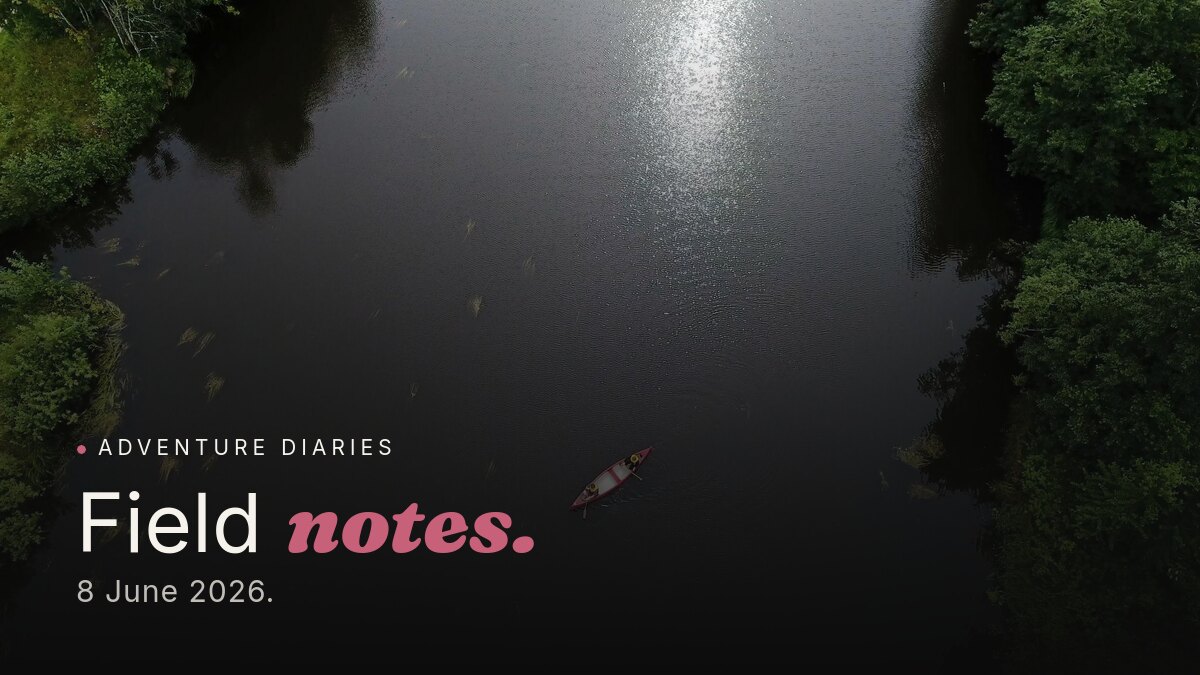
The stream grabbed the boat and capsized the whole thing. Albert stood in the shallows of the Vatsari Wilderness rapids, waist-deep in cold water, diving again and again to recover camera equipment, rucksack contents, and clothing from the riverbed. A right sock gone. A water bottle somewhere downstream. His camera — the one thing he needed to document the journey — submerged. He used a few choice words in that situation, he admits now, and then dragged everything ashore piece by piece. There was nothing else to do but save what he could and keep moving.
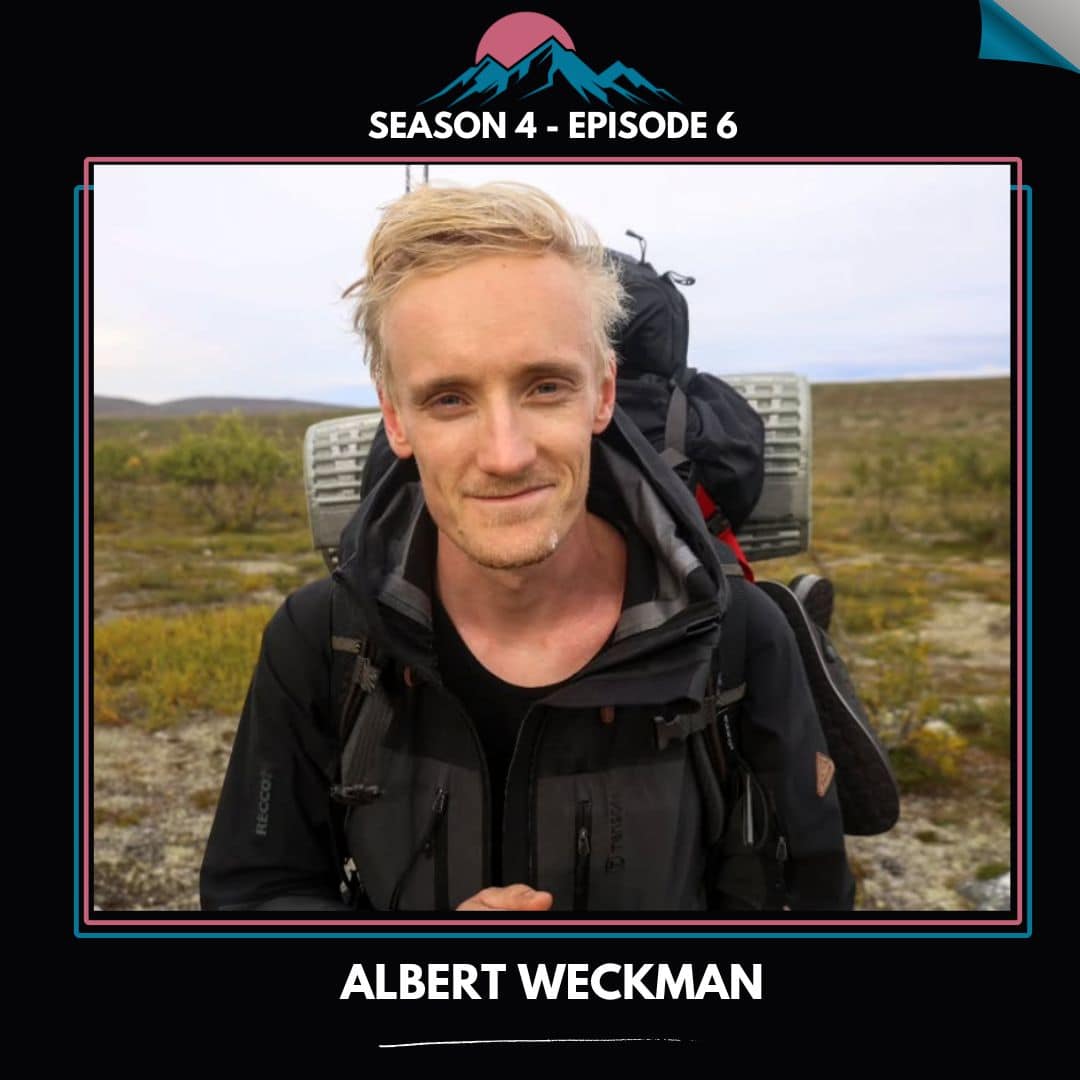
Albert Weckman grew up in the Finnish countryside, spending summers on his family’s cottage in the archipelago — part of the world’s largest island system, with an estimated 80,000 islands scattered across the Gulf of Finland. His childhood was shaped by fishing, skiing, firewood, and foraging. Later he studied political science but felt restless. He discovered a Wilderness Guide programme and enrolled not to become a guide, but to expand his own capability to carry himself in remote places. The survival training — one week in Swedish Lapland, minus twenty degrees, no sleeping bag, no food — became the benchmark against which every other expedition would be measured.
Today Albert documents long solo expeditions through the Nordic wilderness under the name Wilderness Bastards, sharing films and articles that demonstrate what self-reliance actually looks like. His most recent journey — a 300-kilometre, month-long solo traverse of Finnish Lapland by foot and packraft — was featured in Nordic outdoor magazines and followed by thousands online. He works as a political scientist by day, but his focus remains the same: slowing down, preparing for the worst, and proving that you don’t need the best gear to go outside — you just need to start.
Forty kilos and a regiment of mosquitoes.
On the first day of the expedition, Albert shouldered a rucksack weighing over 40 kilos — more than half his bodyweight — and set off into the forest. The temperature reached 26 degrees Celsius, unusually warm even for Lapland, and the mosquitoes descended in clouds. He hiked further than he had energy for, battling the weight, the heat, and the insects. By evening he thought to himself: there’s still one month to go. But this is always the same, he says now. The first day is always the toughest. After a week the blisters heal, the rhythm settles, and the weight becomes invisible. You get used to it.
Paddling south into a southern wind.
Albert had kayaked before, but packrafting across Finland’s third-largest lake — Inari — with a fully loaded rucksack strapped to the bow was something else. The packraft moved slowly. The large rucksack acted like a sail, catching every gust. Winds reached 50 kilometres per hour for days on end, blowing from the south as he tried to paddle south. There were moments 500 metres from shore when he thought: if I get a puncture right now, that’s not good. On one planned 15-kilometre day, he managed four. He pulled ashore, made coffee, and waited for evening. In northern summer the light lasts until midnight, so he could paddle again when the wind dropped. But he knew the line between making a good decision and pushing too far. Alone, that line is everything.
After a couple of days without food, in the cold, you actually find a place of peace.
— Albert Weckman
Bosnian fishermen and the last Snickers.
Near the end of the expedition, Albert paddled across open water and spotted two men in a rowing boat, fishing. They were Bosnian. They were not lost, but they didn’t have much of a plan. Albert asked if he could buy some snacks — his sweet storage was depleted — and they handed him a Snickers and a beer. After that beer he almost felt drunk. Exhaustion does that, he says. A few days later he reached Lemmenjoki National Park and hiked to his final destination. He sat there for a couple of days, eating the last of his mashed potato, reflecting on the month. The feeling was mixed: achievement and fulfilment, but also an empty sensation. When he boarded the train south, civilisation was a shock to the senses.
In this conversation.
We hear how Albert prepared for the expedition by completing wilderness guide training and survival courses in sub-zero conditions with no food or sleeping bag. He explains the weight of his rucksack, the challenges of navigating swamps and rocky ridges, and the difficulties of packrafting alone across large windswept lakes. He describes capsizing in the rapids, losing his camera equipment, and diving to recover it piece by piece. He talks about the mental shift from companionship to solitude, the rhythm of solo life, the absence of large predators, and the moment two Bosnian fishermen appeared in the middle of the wilderness. And he reflects on what it means to plan for the worst, slow down, and keep moving when there’s only one way forward.
Call to adventure.
Albert urges listeners to visit the Nordic countries and take advantage of the Right to Roam, which allows free hiking and camping across vast wilderness areas. You don’t need the best equipment, he insists. Some people believe they need the most expensive tent or clothing before they go outside — that’s not the case. Just take what you have, borrow something, and start small. Go out and try it yourself.
Pay it forward.
Albert supports the Osa Conservation Foundation in Costa Rica, which protects the Osa Peninsula and Corcovado National Park — an area holding approximately 4 per cent of the world’s biodiversity. The foundation creates rainforest reserves through land acquisition and works on environmental education with local communities. With private donations they can expand operations and protect more endangered habitat. Albert and his wife plan to donate, and he encourages others to do the same.
About Albert.
Albert Weckman is a Finnish political scientist, wilderness guide, and expedition filmmaker. Raised in the countryside and the archipelago of southwestern Finland, he completed a Wilderness Guide programme specialising in survival training, including a week-long winter course in Swedish Lapland with no sleeping bag or food. He has since led and documented long solo expeditions through the remote wilderness of Finnish Lapland, paddling and hiking through swamps, forests, and lakes. His work has been featured in Nordic outdoor magazines and shared on YouTube and Instagram under the name Wilderness Bastards. His favourite thing to do on holiday is chop wood.
Somewhere downstream, a right sock still drifts through the Vatsari Wilderness. Albert saved everything else — the camera, the rucksack, the resolve to keep moving. He stood on the shore, soaked and swearing, and then shouldered the weight again. There was only one way to go.