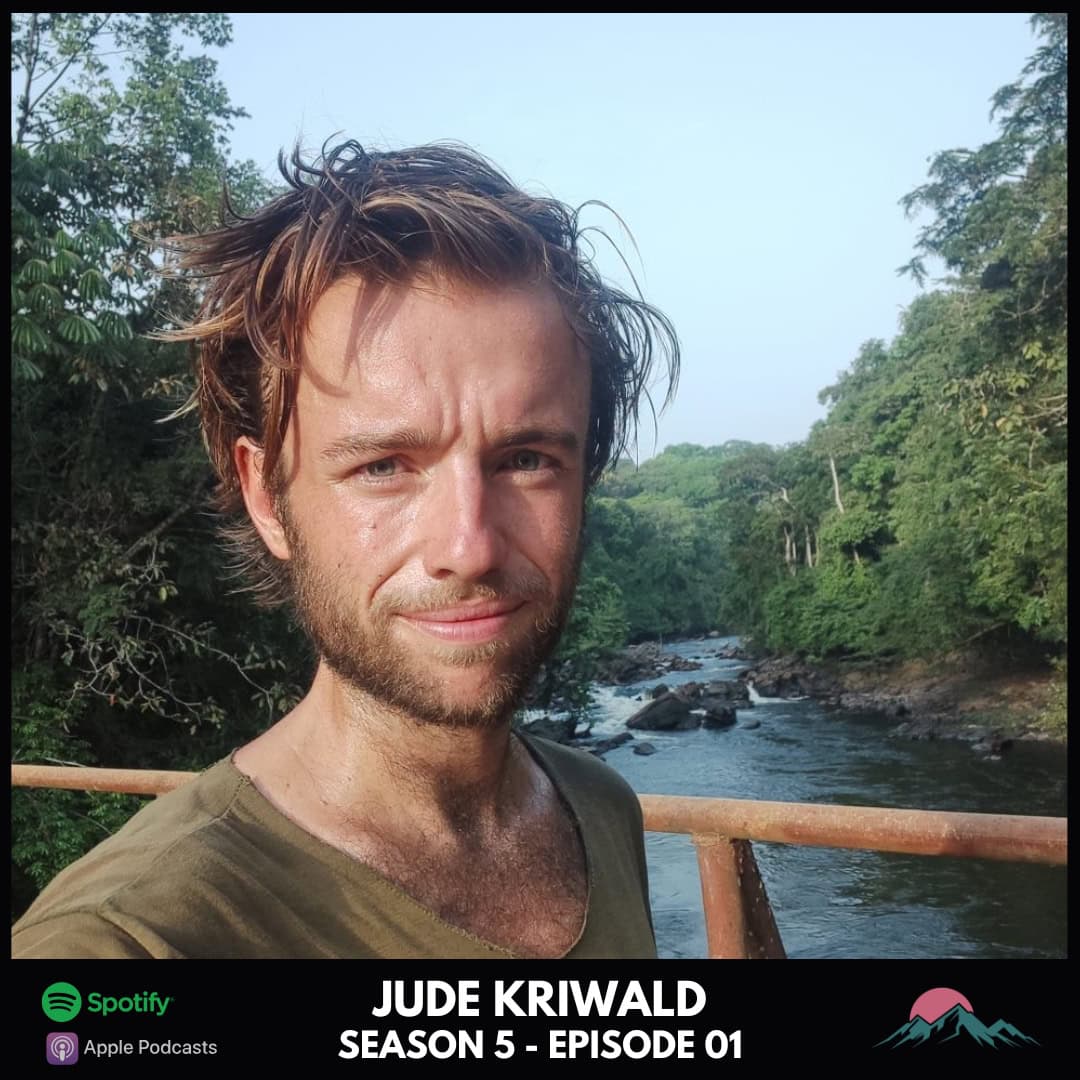
Half eleven at night. Jude Kriwald stands chest-deep in the Atlantic, waves breaking over his head. Six dogs — rabid-looking, barking — wait on the beach. He’d cycled past a compound in the dark, heard barking, tried to run. Now he’s trapped in the sea, salt water in his mouth, wondering how long he can last. This is not the jungle. This is coastal Senegal, first week of the expedition. The dogs eventually leave. Jude crawls out, soaked, exhausted, and pitches his tent in the sand.
Jude left boarding school in Hampshire at 16, restless and unsuited to the path laid out before him — A-levels, university, a career in law or banking. He had wanderlust he couldn’t name, hours lost on Google Maps dreaming of forests and mountains he’d never seen. At 19, with his parents’ cautious blessing, he cycled from England to India — 15,000 kilometres through Europe, the Pamirs in midwinter, 30 days above 4,000 metres sneaking through Tibet, and Afghanistan in the middle of a war. That year, he says, was nothing short of formative.
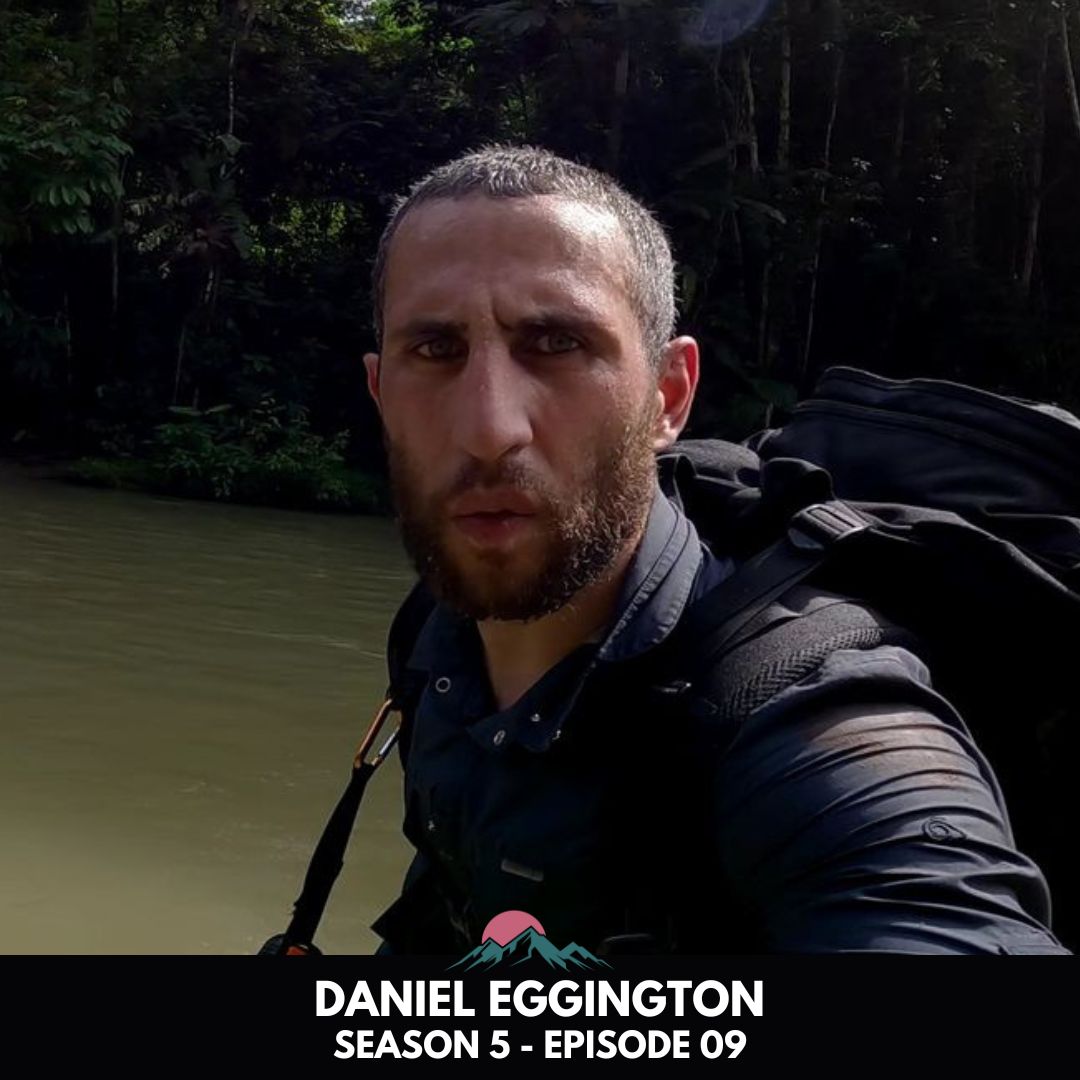
Today Jude is an explorer, adventure filmmaker and mentor. His documentary Alone Across Gola — charting a solo 2,500-kilometre cycle through West Africa’s rainforests — has toured international film festivals including Kendal Mountain and the Royal Geographical Society. He offers free one-to-one mentoring through adventurementor.org for people underrepresented in outdoor adventure, and he’s a vocal advocate for neurodivergence as a strength in the wild. In October he gave up his smartphone and began writing about analogue adventures.
The lost decade.
Between India in 2013 and West Africa in 2023 lay what Jude calls the lost decade. He came home, tried to set up a cycling expedition business, became a cycle courier with Deliveroo, and within a month was offered a job. By the time his university friends graduated, he was managing a department of hundreds. It was meaningful work with people he loved — but at night he’d lie awake thinking: I want to be adventuring. He spent hours on Google Earth planning trips he’d never take: kayaking Indonesian islands, crossing the North Pole. His partner Nicola told him he needed to be authentic to himself. They agreed on three months apart — the limit they could bear. That made the dream possible.
Two questions in the jungle.
Jude chose West Africa because he knew almost nothing about it. He had two questions. One: what’s it like to sleep alone deep in an African rainforest, swinging in a hammock with the bugs and the sounds and the pitch-dark? Two: what is life like for a typical West African villager? The second question was answered off camera, in the middle of the jungle, when he met a man by an old compound. They talked for an hour — about farms, children, lives lived on different continents. When they shook hands, Jude felt he’d got what he came for. The first question took longer. On his first night in the Gola rainforest, exhausted and semi-lost, ants crawling up his trousers, he finally zipped himself into his tent — the same tent from every previous trip — and felt safe. Outside: frogs, birds, insects, big monkeys swinging through the canopy. The jungle at night is so loud. He recorded 20 minutes of it, nothing from him, just chaotic noise. It was worth it just for that.
I had this huge wanderlust I can’t describe with anything other than just that.
— Jude Kriwald
Neurodivergence as a superpower.
Jude was diagnosed with ADHD and autism as an adult. He rejects the word disorder. Put him in a classroom and ask him to sit still for two hours — he can’t do it. Put him in the wild and ask him to find water and shelter, and those same traits become superpowers: novelty-seeking, noticing movement in the distance, hyper-focus when it matters. He believes these neurotypes survived for evolutionary reasons. When everyone’s round the campfire, who spots the wolf coming? The person who’s not paying attention. He struggles with tasks that don’t fill him up, but give him a map and a late-night research session and he’ll plan 40 expeditions he’ll never take — and love every minute. That’s why he started adventurementor.org: to channel all that planning energy into helping others, particularly those underrepresented in adventure — women, non-binary people, people of colour, low-income households. One slot a week, Monday mornings, free. A win-win.
The road that disappeared.
Jude’s route took him from Senegal through Guinea, Sierra Leone and Liberia. He was looking for the Gola rainforest — or rather, the Lofa-Mano National Park on the Liberian side of the same jungle. On OpenStreetMap there’s a north-south road that runs almost the whole way through, except for a 20-kilometre gap where it simply vanishes. Jude thought: I’ll just go and see what that gap is about. He found local help to cross it. The map was correct — there was no road. Where the map was wrong is that the road on the other side had been in disrepair for 20 years. Hundreds of fallen trees, collapsed bridges, nobody using it anymore except the odd person on foot. He pushed his steel Surly — 17 kilos empty, 53 kilos loaded — through jungle so thick the GPS barely registered his position. The canopy hid everything. That made it a greater adventure.
In this conversation.
We hear how Jude left school at 16 with wanderlust he couldn’t explain, cycled to India at 19 through the Pamirs and Tibet, then spent a decade working at Deliveroo while the call of the wild kept him awake at night. We talk about neurodivergence — ADHD and autism — as superpowers in the outdoors, and why analogue adventures matter in a world glued to screens. He tells us about the Gola rainforest: the noise, the ants, the moment he thought he was lost, the village man who asked why anyone would travel for fun. We discuss his documentary Alone Across Gola, filmed entirely solo, and the courage it takes to pick up a dream you dropped years ago. He also shares the hippo encounter he regrets, the money incident he handled with empathy, and why rest days matter more than any film shows.
Call to adventure.
Jude’s challenge: plan an overnight analogue adventure. No smartphone. Look up a place within reach — by cycle, car or public transport. Jot your notes down, or buy an OS map. Navigate by looking at the landscape, not a screen. If you get lost, ask someone. Take a digital camera if you want, or better — a Polaroid, or a sketchbook. Come back and write about it. See how you get on without being glued to a screen. That’s the whole point.
Pay it forward.
Jude supports the British Exploring Society, a charity that for 90 years took public school boys on expeditions — and for the past 20 has done the opposite, taking young people from the most underprivileged backgrounds in the UK on life-changing adventures, from three days to six weeks. They need volunteer leaders — mountain leaders, social leaders, knowledge leaders — and it’s a rewarding way to give back. If you’re 25 or under, it’s an affordable and well-structured way to have incredible adventures. He also runs adventurementor.org, offering free one-to-one mentoring for anyone planning an expedition, particularly those underrepresented in adventure.
About Jude.
Jude Kriwald is an explorer, adventure filmmaker and mentor from the UK. At 19 he cycled from England to India via the Pamirs, Afghanistan and Tibet. After a decade working in operations at Deliveroo, he returned to adventure in 2023 with a solo 2,500-kilometre cycle through West Africa’s rainforests. His documentary Alone Across Gola has toured international film festivals including Kendal Mountain and the Royal Geographical Society. He volunteers with the British Exploring Society, mentors underrepresented adventurers through adventurementor.org, and writes about analogue adventures on Substack. In October he gave up his smartphone. He rides the same steel Surly Long Haul Trucker he took to India — frame welded for 10p in the middle of the Tibetan Plateau, still going strong.
Somewhere off the coast of Senegal, six dogs have moved on. Jude crawls out of the Atlantic, pitches his tent in the sand, and lies awake listening to the waves. In a few weeks he’ll be deep in the Gola rainforest, swinging in his hammock, listening to the frogs and the monkeys and the chaotic noise of the jungle at night. That’s what he came for. To sleep alone in the wild, to meet a man by an old compound and talk about lives lived on different continents, to be authentic to himself again. The road disappeared from the map. He went anyway.