It was 5:30 in the afternoon in Pirenópolis State Park. Letícia Benavalli was checking camera traps, alone, doing the routine monitoring she’d done a hundred times before. Then the jaguar appeared. Black. Melanistic. One of the rarest colour variants in the species — only 10% of jaguars carry the gene. It stood a few metres away, staring. She knew the protocol: avoid eye contact, back away slowly, stay calm. Instead, she stared right back. Their eyes met. The moment stretched. Then it was over.
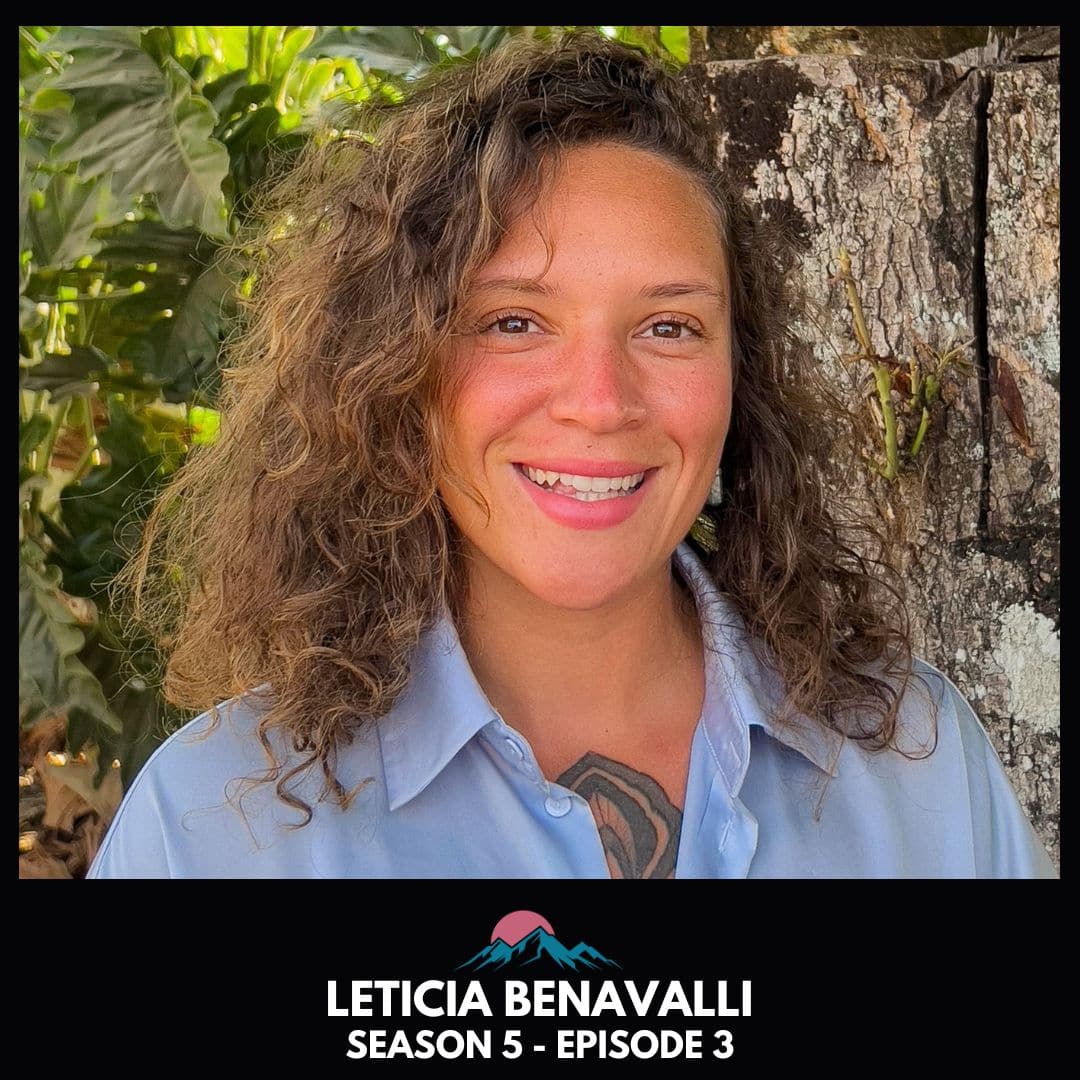
Letícia grew up in São Paulo, the largest city in Latin America — a world of concrete and traffic, not jaguars and savannas. As a girl riding two buses to school each morning, she’d watch the landscape blur past and think: there has to be more to life than this. That quiet restlessness led her to biology, then to Antarctica at 19, then to the Cerrado — the world’s most biodiverse savanna, and one of its most threatened.
Today she is the founder and director of the Pro Onça Institute, an NGO working to protect jaguars and restore habitat across Brazil’s vanishing Cerrado. She has studied at Oxford’s Wildlife Conservation Research Unit, won a Rolex Explorers Club grant, and is now mapping wildlife corridors, training rural women as conservation leaders, and proving that jaguars still exist in places where they were thought to be locally extinct.
The Cerrado — Brazil’s forgotten savanna.
The Cerrado is the most biodiverse savanna on Earth — richer even than the African plains. It is also the cloud-maker: most of the water that flows through the Amazon begins here. Yet more than 95% of it sits outside protected areas, and it is being deforested at almost three times the rate of the Amazon. Fires, agriculture, and fragmentation are carving it into isolated patches. Fewer than 5% of its lands are legally safeguarded. For the jaguar — and for the people who depend on this landscape — time is running out.
Lost in the field.
Letícia once spent three days lost in the Cerrado. It was supposed to be a quick trip to check camera traps. She turned left instead of right. Her GPS battery died. Her phone went dark. What should have been routine became a test of survival — two nights on a rock, foraging for insects, listening to the forest she could not see. On the third day, a landowner’s helicopter spotted her. She was lucky. The experience taught her a hard lesson: even the familiar can turn dangerous. Now her team follows strict protocols. Nobody goes anywhere alone. Everyone carries backup batteries and emergency GPS. She also carries a gun — not to use, but to know it’s there.
Black jaguars in an urban park.
Last year, Letícia began monitoring Brasília National Park — the largest urban national park in Brazil. For 50 years, people said no jaguars moved through it. Then her cameras caught a male. This year, they caught a female. That changes everything. Males wander. Females settle, breed, build populations. The park may now hold enough prey — capybaras, giant anteaters, tapirs, even invasive wild boar — to support a breeding population. If the data holds, it could rewrite the future of jaguar conservation in Brazil’s most populated landscapes.
I’m gonna stare right back.
— Letícia Benavalli
Empowering women in conservation.
Pro Onça is not only about jaguars. It is about the people who live alongside them. Last year, Letícia trained 20 rural women to lead conservation ecotourism ventures in the Cerrado. They are now receiving their first clients from Europe and the United States — not for jaguars, which are hard to see, but for birds and other wildlife. The women come from different backgrounds and ages, from their twenties to their sixties. Some study biology. Some are semi-retired landholders. All are learning that their home is valuable not because of what can be extracted from it, but because of what it already holds.
In this conversation.
We hear how Letícia went from the bright lights of São Paulo to studying black jaguars in one of the world’s most threatened savannas. We learn what it’s like to survive three days lost in the Cerrado with no phone, no food, and no plan. We discover how she is using camera traps and DNA analysis to prove that jaguars still exist in places thought abandoned, and how she is empowering rural women to lead conservation tourism ventures that offer an alternative to deforestation. We also explore the tensions of working on private land with hostile hunters, the hope of creating wildlife corridors between the Cerrado and the Atlantic Forest, and the discovery of a breeding female jaguar in Brazil’s largest urban national park.
Call to adventure.
Letícia’s challenge is simple: try climbing. Not just for the view or the adrenaline, but for what it teaches you about your own limits, your own patience, your own capacity to solve problems under pressure. If you want a place to start, she suggests Cocalzinho de Goiás in the Cerrado — one of the best bouldering destinations in Latin America, surrounded by biodiversity most people will never see.
Pay it forward.
Letícia recommends WE CAN, an organisation working to empower indigenous women around the globe. One of their projects focuses on how indigenous women are restoring habitats in the Brazilian Amazon, integrating traditional knowledge with scientific practice — a model Letícia believes is essential for the future of conservation.
About Letícia.
Letícia Benavalli is a Brazilian conservation biologist and the founder of the Pro Onça Institute, an NGO dedicated to protecting jaguars and restoring habitat across Brazil’s Cerrado. She has spent 11 years working in Brazil’s wildest landscapes, holds a diploma from Oxford’s Wildlife Conservation Research Unit, and is a Rolex Explorers Club grant recipient. She is affiliated with the IUCN’s World Commission on Protected Areas and is currently researching the origin of melanism in Brazil’s black jaguar populations. She is also a climber, a storyteller, and a believer that conservation must be inclusive — or it will fail.
Somewhere in the Cerrado, a black jaguar is moving through the dusk. Letícia’s cameras will catch it. Her data will map it. Her work will prove it was never really gone. And when their eyes meet again — in the field or in the frame — she will stare right back.