They had been walking through the jungle for about an hour when the rock came into view. It looked like a crown or a claw, resting on three other massive boulders. Joe turned to Anders, who just stared and said, “What the hell?” They stepped inside. Every surface beneath the overhang was covered in drawings — layers of them, fingerprints still visible in the clay, older ones faint beneath. For ten minutes, nobody spoke.
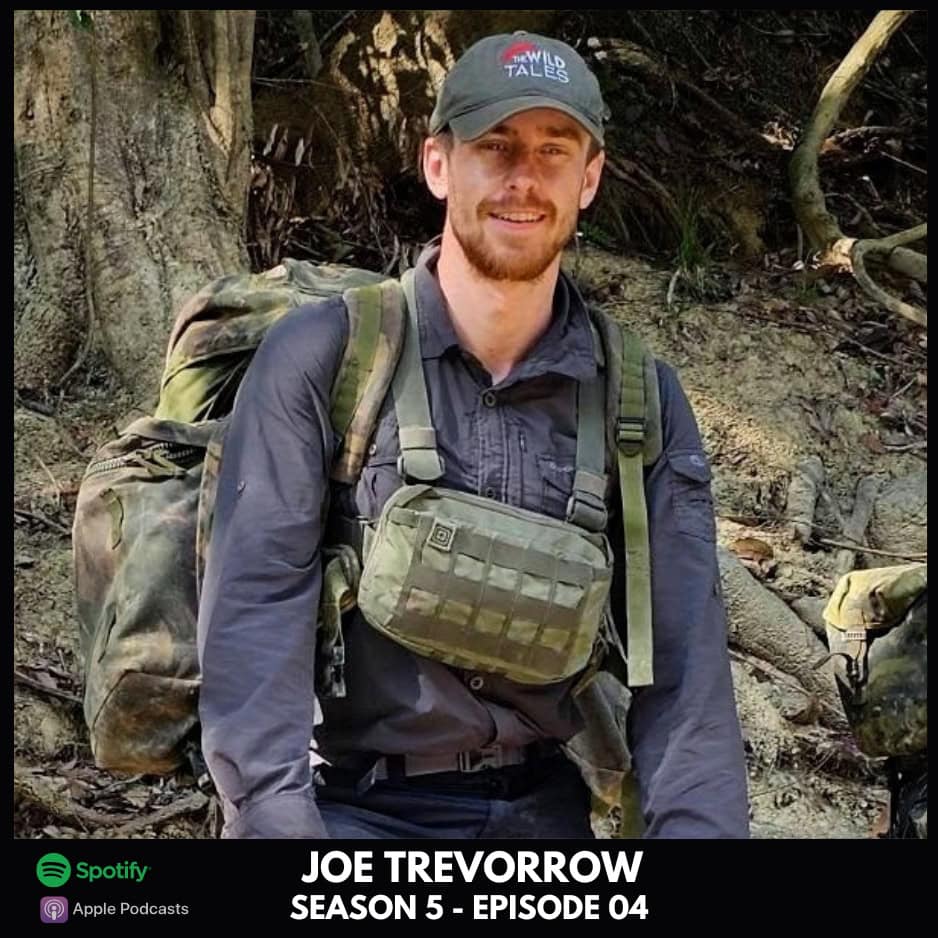
Joe Trevorrow joined the Royal Navy in 2015 at twenty years old, drawn to the outdoors through family walks in the New Forest and a stubborn refusal to let a failed Ten Tors attempt define him. Four years later, after expeditions in the deserts of India and the bush of Kenya, he left the service and sent an email to Anders Andersen at The Wild Tales. He wanted to see the jungle. That email led him to the Wai Wai community in southern Guyana, and then deeper still — into some of the least documented corners of the country’s interior.
Today Joe works part-time as an expedition guide for The Wild Tales, an indigenous-led tourism company operating in Guyana’s rainforests. Over the past two years he has helped lead three major expeditions: a month-long descent of the Cassai Chi — the River of Death — where undocumented petroglyphs line the banks; a ten-day push to the summit of Makarapan Mountain, where two giant mystery pots sit inexplicably near the top; and the discovery of a hidden cave in the cloud forests near the Venezuelan border, its walls covered floor to ceiling in ancient drawings.
River of Death.
The Wild Tales operates by partnering with Guyana’s nine indigenous nations — the Wai Wai, Macushi, Patamona, Carib, Akawaio, Arawak and others. The company provides logistics; the communities provide the guides, the knowledge, and the lifeline. Every expedition is indigenous-led. On Joe’s first journey, he travelled down the Cassai Chi River with Wai Wai guides, passing through landscapes that shift from open Rupununi savannah to dense primary rainforest and then into the Acarai Mountains on the Brazilian border. The river’s name translates as River of Death. In the 1830s, the explorer Schomburgk recorded that bodies of the Taruma people were said to flow down it. Joe and the team now believe disease — not war — killed the Taruma, introduced through contact with the Wai Wai, who had migrated north from Brazil and carried immunity the Guyanese tribes did not.
All the way down the Cassai Chi into the Essequibo River, petroglyphs appeared on the rocks. None had been documented by outsiders before. One carving — a sun beside a rapid — seemed to function as a water gauge: if you could see the sun, the water was low enough to pass safely. Joe also found a shard of rhyolite quartz in a cave, significant because it only comes from the Pakaraima Mountains near Mount Roraima, a couple of hundred miles away. The tribes were trading and moving across distances we underestimate. At Masakenari, the Wai Wai village at the end of the route, an elderly woman pulled out a 1952 RGS journal — missing its front cover — and pointed to photographs of herself and her father taken by the first British explorers to reach the area.
You do not fight the jungle, because you will lose every time.
— Joe Trevorrow
The pots.
A footprint photograph arrived while Joe sat on flat boulders on the Cassai Chi. Barefoot. Recent. Sent by one of the indigenous team near Makarapan Mountain in central Guyana. The mountain — 960 metres, the height of a Scottish Munro, but covered in jungle so thick you use all four limbs to scramble up — had been a refuge for the Macushi and Patamona when Carib raiding parties came through. Joe and a small team of six set out. Inside the basin they found broken pottery in caves along the river route, and then, just below the summit, two giant pots. The size of Atlas Stones. Hollow. Sitting beneath a cliff overhang, 50 metres below the top, in an area with no water source, no food, barely any access. Even the experienced Patamona and Macushi guides — Vivian, Carlos, Jonah — were baffled. How do you carry something that round, that heavy, up a near-vertical mountain thick with thorn bush? Why would you? The team could only speculate: a refuge stocked with cassava and water, or a spiritual site connected to forest spirits and signal fires visible across the Pakaraima range.
The cave.
At a bar in Kopinang, near the Venezuelan border, a Patamona man with enormous calf muscles told Joe and Anders about a cave on Waka Mountain — Cat’s Ears — full of white drawings. He gestured vaguely. Everything understated. A year later, after logistics coordinated by the Kopinang toshao and village, a team of ten with six Patamona guides set out. The Patamona move faster than any other Amerindian group. Their concept of time is different. “About an hour” meant roughly ten hours. On day one a guest fell ill; his 30-kilogram pack was redistributed. Joe went into Navy mode — organising, directing — and Anders pulled him aside. People didn’t need orders; they needed encouragement. Joe adjusted. Day two, everyone smashed it. On day four or five, the rock appeared. Not a conventional cave — a crown-shaped formation resting on three massive boulders. Inside, every surface was covered in drawings. Layers of them. Recent ones with visible human fingerprints in the clay, older ones barely distinguishable beneath. Figures that looked like frogs. One frog-human hybrid with female anatomy and something emerging — possibly fertility-related, possibly documenting births. The local Patamona guide who had stumbled across it while growing pineapples sat in the corner, smiling. He had once been bitten by a bushmaster, walked home over two days, and gone to bed. He was quietly, deeply proud.
I could have been sitting here five million years ago and literally nothing would have changed.
— Joe Trevorrow
In this conversation.
We hear how Joe transitioned from the Royal Navy to guiding expeditions in primary rainforest, why indigenous-led tourism helps keep traditional skills and knowledge alive, the logistics of navigating rapids in dugout canoes with Wai Wai guides, the archaeological mystery of pottery shards and rhyolite quartz found hundreds of miles from their source, what it means to carry giant pots to the top of a near-vertical mountain, the iconography of frogs and fertility in Patamona cave art, the night a guest’s howl in the dark stopped everyone breathing, and the leadership lesson the jungle taught Joe when ambition got ahead of good judgement.
Call to adventure.
Go somewhere that makes you feel completely out of your depth — somewhere with no familiar reference point. The real growth happens when everything you know stops being useful. Whether that’s a jungle in Guyana or a week camping somewhere you’ve never been, the environment teaches you more than any amount of preparation. And go with people who know the land.
Pay it forward.
The Wild Tales actively supports indigenous communities in Guyana by providing sustainable income through tourism, giving the Wai Wai, Macushi and Patamona a reason to keep traditional skills and knowledge alive. Every expedition booking goes directly into these communities. Joe also encourages sharing the archaeological findings — if you know a specialist in Guyanese archaeology or Amerindian history, put them in contact with The Wild Tales.
About Joe.
Joe Trevorrow is a former Royal Navy sailor and expedition guide with The Wild Tales, an indigenous-led tourism company operating in Guyana’s rainforests. Since 2023 he has helped lead expeditions to some of the least documented regions of the country, including the Wai Wai territory in the south, Makarapan Mountain in the central belt, and the Patamona cloud forests near the Venezuelan border. Joe grew up in the New Forest and joined the Navy in 2015, leaving four years later to pursue adventure in primary rainforest. He now lives in the UK and works part-time guiding expeditions in Guyana.
Somewhere in the cloud forest near Waka Mountain, beneath a crown of stone, the fingerprints are still visible in the clay. Nobody knows who left them, or when, or why. Joe sat by the Cassai Chi one night, the Milky Way stretched out above, howler monkeys moving through the canopy, and realised he could have been sitting in that exact spot five million years ago and nothing — absolutely nothing — would have changed.