Two metres above the water’s edge in a gorge, hammocks slung between thin trees, the sky erupts with thunder. Beki Henderson and Dave Leakers sit by their fire and think about the countless fallen trunks upstream — natural dams that could go at any moment. If one breaks, a wall of water will hit them. They are trapped in the middle of the night, in the absolute middle of the Gabonese jungle, at high risk of flash flood. They haul all their gear up into the trees using throw lines, leave two knotted ropes dangling from their hammocks, and lie awake listening.
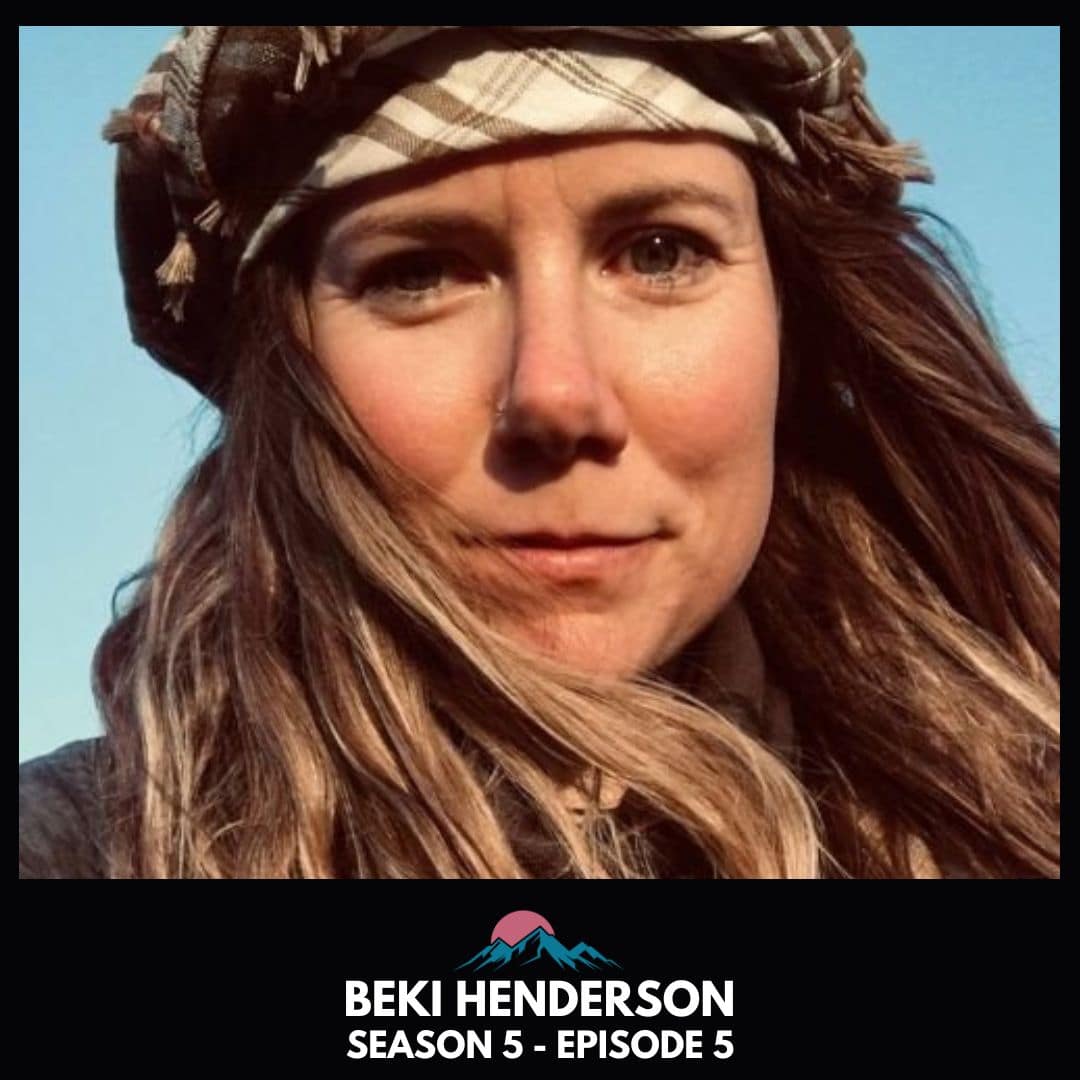
Beki Henderson grew up in a small town in North Yorkshire — not an adventurous family, not scaling walls at five. She was the kid who begged to be a shepherd in the nativity play when every other girl wanted to be an angel. If eight-year-old Beki could see her now, she would be petrified. Adventure came later — through graphic design, theatre film, a friend who said she should work in television. A stepping-stone career built by watching others and thinking: I want to do that. Now I want to do that.
Today she is a BAFTA-nominated adventure filmmaker and expedition safety specialist — one of the most experienced field producers working in adventure television. She has taken camera crews and talent into the Congo Basin, the high Arctic, and dozens of remote environments in between, working alongside Steve Backshall, Ben Fogle, Levison Wood, and most recently Will Smith on the National Geographic series Pole to Pole. She holds a Wilderness First Responder qualification, water rescue, ropes rescue — skills built in parallel with her career, because competency does not always come with a piece of paper.
The Green Abyss — paddling a river that won’t be paddled.
In late 2023, not long after Gabon’s military coup, Beki launched the Green Abyss — a month-long pack-raft expedition through Waka National Park to paddle the little-known Akoi River and reach communities on the edge of the park. The objective was not just adventure for its own sake, but to learn about the impact of conservation — specifically, what national parks were doing to the way of life of people who had lived there for millennia. The river had never been documented as being paddled. The satellite imagery was cloud cover or canopy cover. Beki and Dave Leakers used topography to map the route, looking at valleys and elevation drops to estimate where rapids and waterfalls might be.
They planned to cover 25 kilometres a day. Within the first half-day, they were covering three to four kilometres. Tree trunks and blockages everywhere. Strainers — fallen trees like colanders through which water flows but objects do not — presented severe risk of drowning. Every portage meant relaying kit three times. The further down the river they got, the more powerful it became, and the more obvious it was that the river would win nine times out of ten. They spent days on and off the water, and then came the night in the gorge — the storm, the realisation that flash flood was the real threat, and the decision to leave the river entirely.
Risk isn’t dramatic. It isn’t heroic. It’s really that deep, long-lasting uncertainty of knowing something may or may not happen.
— Beki Henderson
The village that no longer exists.
Beki had been planning to reach the village of Ingondé for about a year. It had existed for over a century. When she finally arrived, it was gone. The villagers had moved to a new settlement about a day’s walk away. The official explanation was elephant invasion — forest elephants running through crops and destroying a year’s supply of food. But Beki also heard the constant banging and hammering of small-scale gold panning along the river near the new village. The truth, as always, was more complicated. Hunter-gatherer communities that had lived sustainably for millennia were now being told that subsistence hunting was poaching. Conservation had made their way of life illegal. To survive, they needed cash — and gold panning provided it. The people who live in those villages are not the problem, Beki says. It is often the external outsiders who are the problem. Their way of life often sustains the jungle rather than depletes it.
In this conversation.
We hear how Beki built a career in adventure television without an adventurous childhood — how she curated that career by watching others and saying yes to the next step. We hear about the flash flood night in the gorge and the deep understanding of risk that came with it — not the perceived risks of crocodiles and rapids, but the long-lasting uncertainty of what might happen upstream. We hear how a village disappeared, why conservation can threaten the people it is meant to protect, and what it means to tell other people’s stories without judgment. We hear about Type Three fun — the expedition moments that will never be fun for Beki, but that offer something deeper when pulled apart and analysed. And we hear how she is reframing adventure itself — shifting it from the highest, the longest, the fastest, to something about learning, perception, and walking away.
Call to adventure.
Figure out what is adventurous to you. Where is your edge? Most of us retreat when we get to the edge of our comfort zone. Find what is uncomfortable to you but still within your ability, and go and do it. For some that might be camping for a night. For others it might be a multi-day hike. Start with what takes you outside your comfort zone — because as soon as you get there, you strip the ego away. That is when you get your real adventure. And it does not have to cost anything. Just decide. Put a backpack on your back and start.
Pay it forward.
Beki is currently working with the Black Mambas — an all-female anti-poaching unit in South Africa focused on preserving and protecting wildlife by educating and protecting their community. They stop would-be poachers before they pick up a gun, at school age, through inspiration. They patrol their reserve daily, unarmed. Beki is working with them to get their story out into the world through their own eyes and their own authorship.
About Beki.
Beki Henderson is a BAFTA-nominated adventure filmmaker, expedition safety specialist, and one of the most experienced field producers working in adventure television. She has spent years taking camera crews and talent into some of the world’s most remote environments — from the Congo Basin to the high Arctic — working alongside Steve Backshall, Ben Fogle, Levison Wood, and Will Smith on National Geographic’s Pole to Pole. In 2024 she launched the Green Abyss, a month-long pack-raft expedition into Gabon’s Waka National Park to paddle an undocumented river and reach communities on the edge of the park. She holds qualifications in wilderness first response, water rescue, and ropes rescue, and is currently developing projects focused on community-led storytelling.
Somewhere in the Gabonese jungle, two hammocks still hang in memory — two metres above the water’s edge, two knotted ropes dangling, a fire that burned through the night while thunder rolled overhead. The expedition that was meant to paddle a river became the expedition that walked away. And in that walking away, Beki found what risk really is — not dramatic, not heroic, but the deep uncertainty of knowing something may or may not happen, and the quiet decision to haul your gear into the trees and wait for morning.