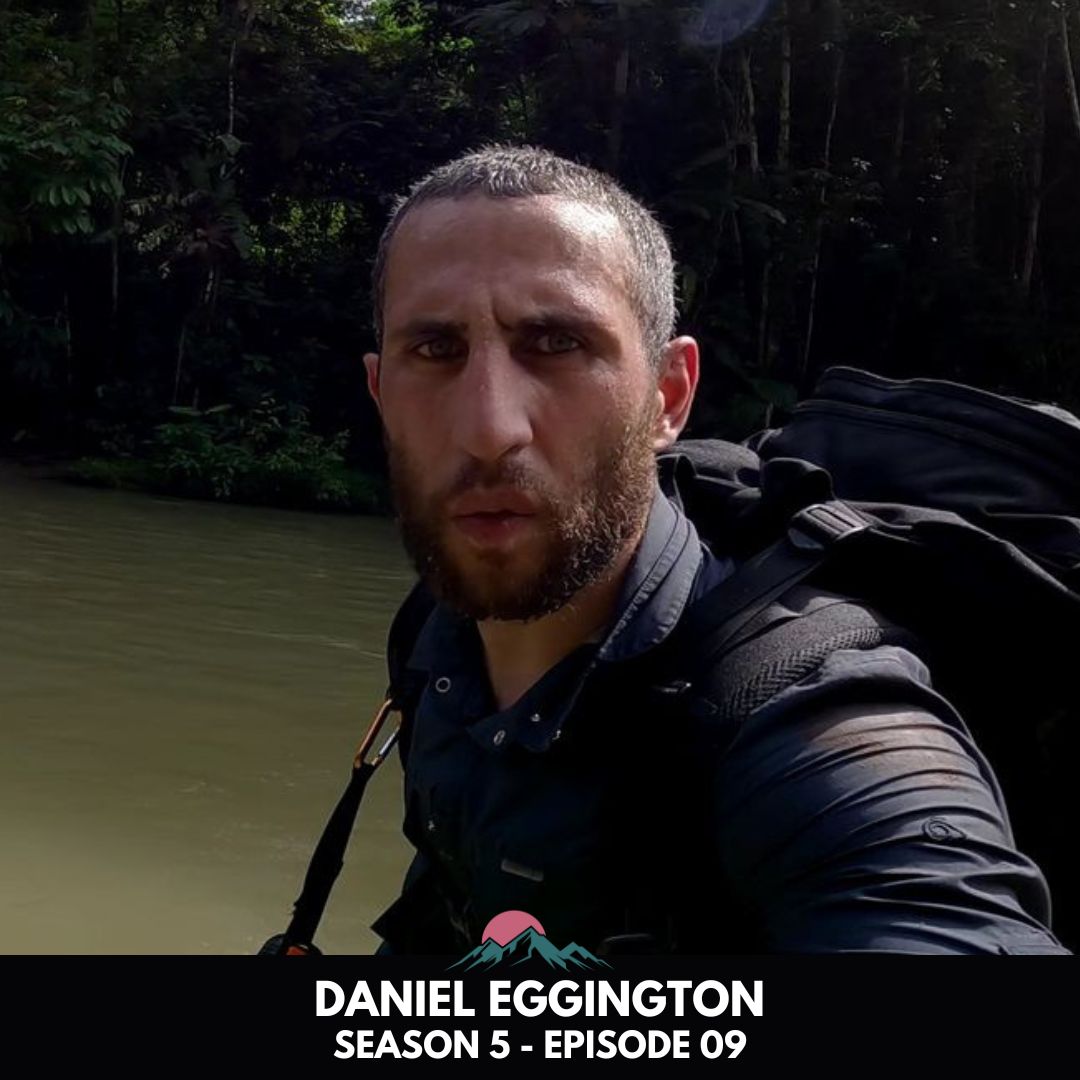
The Colombian military just took Daniel Eggington’s passport. A boat waited at dawn. He’d been hiding in a top-floor room in Juradó for ten days, slipping out only at night to meet his fixer. From the town you could hear the fighting in the jungle — arms moving back and forward across the Panamanian border. The SENAFRONT special forces might cross over any day. Daniel had paid $1,500 to a man in a bucket hat studded with gold earrings. He had $300 left. The two young guides introduced him to an older man who would walk him into the gap. By 6 AM they were gone, seven rivers crossed on the first day, and on day two the guide looked at him and said, “If I get picked up, I’m going to prison for a long time.” Then he walked away.
Daniel Eggington grew up in a terrace house in Birmingham, the Black Country, middle England. He spent weekends travelling five houses up the gardens one way, then five houses down the other. He collected spiders, trapped squirrels, climbed sheds on a dare. His uncle took him camping. At 17 he worked six months at Dudley Zoo with the venomous snakes and crocodiles, got £800 tax back, walked into a travel agent and booked a flight to Sumatra with no research and no plan. He turned up in Medan Airport in combat gear and para boots. The military held him for hours. He met three locals — Wanderbendi and Pink — and walked 12 days into the Sumatran jungle, where he saw a wild tiger at a watering hole and turned 18 under the canopy.
Today Daniel is an expedition adventurer planning one of the most ambitious journeys on Earth: a full traverse of the Congo River, end to end, on foot. He has paddled Guyana’s Essequibo River in a dugout canoe and crossed the Darien Gap on his third attempt, after four years of planning, cartel permission and hostile environment training run by ex-MI5 operators. He is 30 years old. He sponsors a Brazilian jiu-jitsu champion from a Rio favela and will spend 12 months in the Congo if the spreadsheets hold.
The dugout canoe and the Essequibo.
In 2018 Daniel flew into Georgetown, Guyana, with a plan to paddle upriver to a remote indigenous community called Aranaputa. A local guide named Paul — energetic, full of Caribbean vigour — flipped the plan on its head. Go downriver, he said. Charter a plane to the source, buy a dugout canoe, bring interest to the indigenous community and the conservation. Daniel spent four or five days walking around small villages near a place called Kingstown, asking if anyone had a boat for sale. Boats there are as important as cars. If you have a decent boat, you are high-end society. He found one made of Angela wood, a granddad’s boat, and bought it for a hundred quid. The captain of the village, Campbell, and his son James — called Ozzy — joined him. They were told in Aranaputa they would be eaten by caiman, killed by the jungle. They launched anyway.
We might die.
— Daniel Eggington
The first paddle broke after six days. They hacked a replacement from purpleheart wood with a machete, five hours in the dark, and it ruined the blade. Campbell asked if polar bears lived in England. Ozzy asked if dinosaurs still existed — he had a National Geographic from the seventies. They saw giant river otters, black caiman, harpy eagles, a man hunting paca with a bow and arrow and a Jack Russell. On day six they met a man covered in scars with a missing eye, living alone on the river. Campbell and Ozzy told Daniel not to look. The man threw them a fish and disappeared. They said he was a Kanaima — a shapeshifter who had killed someone upriver and vanished into the jungle. Daniel lost all the photographs but kept the video. Twelve days later they reached Bartica, a cowboy town lit by aerosols and lighters, full of illegal gold miners with guns on their waist.
Four years, three attempts, one gap.
Daniel first heard about the Darien Gap in a film about a man who travelled south through Latin America and stumbled into cartel territory. He started researching in 2017. Every search response said: do not go, death, worst place on the planet. He made three recce trips to Colombia, met boat captains, reached out to cartel members on social media, partied with locals so they knew his face. In 2019 he finally connected with Comandante Otoniel, head of the Clan del Golfo. Permission granted. Then, that same weekend, a journalist messaged him on LinkedIn: Otoniel had been killed in an airstrike. Four years of planning, gone. Daniel went anyway. He paid $1,500 to a fixer in a bucket hat. He hid for ten days in Juradó, avoiding migration police. Two young men took him three hours upriver to a smaller village. An older man agreed to walk him to the Panamanian border. They crossed seven rivers on the first day. On day two, close to the border, the guide said he would go to prison if SENAFRONT caught him. He gave Daniel directions — down the hill, turn left, follow the river, turn right — and walked away.
Alone in the jungle.
Daniel walked alone for days. He found a skeleton, old bones, and a Venezuelan girl’s ID. He came across two men in their early twenties, worse off than he was, one with a pistol. He remembered the hostile environment course he’d taken before the trip — run by ex-MI5 and SF operators who blindfolded him, threw him across a field, chinned him, dragged him by his feet, put a gun to his head and fired blanks. They told him every random Westerner is worth £200,000 in ransom once a GoFundMe goes viral. He ate termites and fish eggs. On one night the biggest storm he’d ever seen hit — lightning and thunder at the same time, the vibration shaking the hammock, two deadfalls crashing down metres away. He made it to the Jaqué River in bits, skin coming off his back. A young kid fishing took him downriver for a hundred-dollar note and never gave change. SENAFRONT stripped him naked, quizzed him, made him re-enact his walk into the village for the camera. Once they realised he was just a daft guy from Britain, they became best friends.
In this conversation.
We hear how Daniel went from climbing garden sheds in Birmingham to seeing a wild Sumatran tiger at 17, how he bought a dugout canoe from an indigenous captain’s family and paddled 12 days down the Essequibo River, meeting Kanaima shapeshifters and illegal gold miners. We hear how he planned the Darien Gap for four years, survived two failed attempts, paid cartels for permission, was abandoned by his guide on day two, walked alone through storms and deadfalls, found skeletons and armed men, and made it to Panama after six to eight weeks. We hear about the hostile environment training that prepared him for kidnap, the nightmares that still come, and the 12-month Congo River expedition he is planning next — a walk through what one contact called “the entirety of Hell.”
Call to adventure.
Pick something outdoors and commit to it heavily for two or three months. A five-mile run, a hill you’ve always wanted to climb — Pen y Fan in the Brecon Beacons, South Wales. Set yourself a goal, train for it, get off the screen. It doesn’t matter if it’s small in comparison to some or big in comparison to others. Just commit to it. Happy days.
Pay it forward.
Daniel sponsors Victoria, an 18-year-old girl from a high-risk favela in Brazil where 10-year-olds walk around with machine guns. He taught kids boxing there in 2017. Two of the three he worked with have since died through gang violence. Victoria avoided the gangs, avoided the typical work young women do in the favelas, and committed to Brazilian jiu-jitsu. She is now ranked number one in Brazil in her weight class. Daniel sends her $300 a month for kit, bills, whatever she needs. From autumn he will offer schools the option to pay her directly instead of paying him for talks. You can reach out via his website to support her.
About Daniel.
Daniel Eggington is an adventurer and expedition planner from the Black Country in the UK. At 17 he spent 12 days in the Sumatran jungle and saw a wild tiger. He has since paddled Guyana’s Essequibo River in a dugout canoe, crossed the Darien Gap after four years of planning and cartel negotiation, and completed expeditions across Costa Rica, Brazil and the Amazon. He has undertaken hostile environment and kidnap behaviour training with ex-MI5 and special forces operators. He is planning a 12-month man-powered traverse of the entire Congo River from Zambia to the Atlantic coast, beginning reconnaissance in September. He sponsors a Brazilian jiu-jitsu champion from a Rio favela and will begin giving talks in schools from autumn. You can follow his expeditions at danieleggington.com and on Instagram.
He still has the rucksack from Sumatra. He doesn’t use it. It’s just memorabilia. But the bucket-hat fixer in Juradó, the man with the gold earrings who took $1,500 and opened the door into the gap — Daniel never saw him again either. Only the jungle, the storms, the rivers, the scars. And the guide who walked away on day two, somewhere still out there, avoiding the border police, living by directions no one writes down.