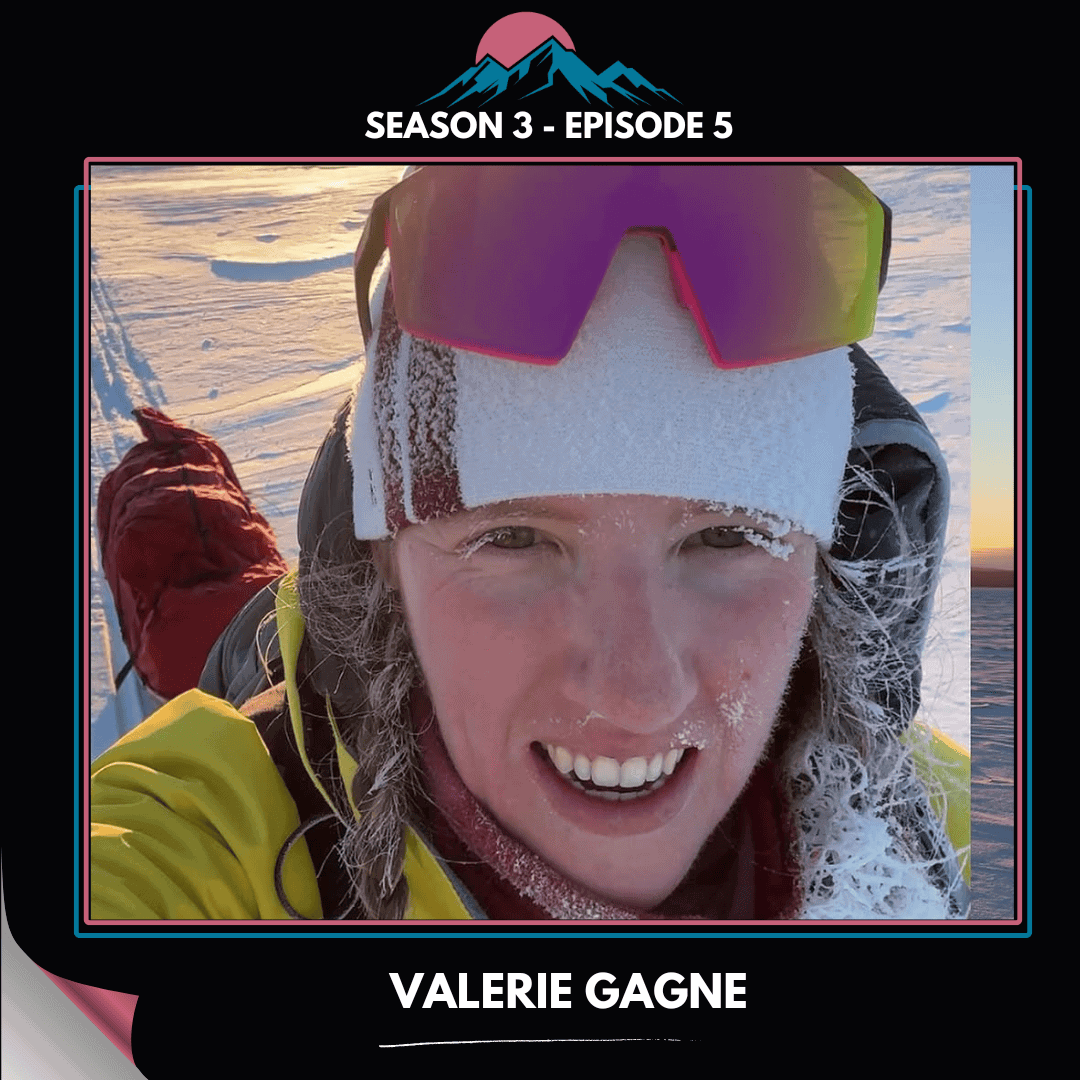
The slush beneath her skis was not supposed to be there. Valerie Gagné had planned for hard ice, wind, the kind of cold that turns breath to frost mid-exhale. What she had not planned for was the neck injury — the one that left her barely able to lift her head off the sled harness, staring at nothing but white for hours at a time. Or the fact that, 200 kilometres around the frozen Manicouagan Reservoir, there would be no one to tell her to stop.
The Manicouagan Reservoir — known locally as the Eye of Quebec — is a ring of water formed by a meteor impact millions of years ago. In winter, it freezes into a sprawling disc of ice and uncertainty. Valerie chose it deliberately. Not because it was famous. Not because it would earn her a ranking. But because it was close, it was hard, and no one else was paying attention.
This was not the life she had once trained for. As a child, Valerie ran behind her mother’s car at age eight to prepare for her first race. Later, she chased Olympic dreams in skiing and rowing — the kind of single-minded pursuit that organises a life around split times and podium finishes. But when that dream ended, what remained was a question she had never thought to ask: what happens when you stop racing other people?
The turn from podiums to purpose.
Valerie stepped away from elite sport without fanfare. There was no dramatic injury, no final race. Just a quiet recognition that the version of herself she had built — disciplined, relentless, focused — no longer fit. What came next was harder to name. She took a job as an air traffic controller. She kept moving. But the hunger for something deeper remained.
Then she found Impossible to Possible — a youth expedition organisation that combines endurance with education, taking young people into remote environments and asking them to see what they’re capable of. Valerie joined as a participant first, then a guide. In 2020, she led a team across Lake Baikal in Siberia, navigating its frozen expanse in temperatures that turned metal brittle and made every decision matter.
It gave me wings.
— Valerie Gagné on Impossible to Possible
The work recalibrated her. Where competition had been about being first, guiding was about being present. Where racing had demanded perfection, expeditions rewarded adaptability. She began to see adventure not as a performance, but as an apprenticeship — a way of learning that never ends.
Two hundred kilometres of slush.
The Eye of Quebec expedition was her own design. No support team. No GPS tracker broadcasting her position to followers online. Just Valerie, a pulk sled, cross-country skis, and the kind of solitude that amplifies every mistake. The ice was unstable in places — pockets of slush that soaked through her gear and turned movement into a grinding effort. Her neck, already injured before she started, worsened as the days passed. She could not look up. She could not turn her head to check her surroundings. She simply kept the horizon in her peripheral vision and skied.
There were no crowds. No one waiting at a finish line. The reservoir is not a destination most people have heard of, and that was precisely the point. Valerie was not trying to prove anything to anyone else. She was learning to trust herself in the kind of environment where trust is the only currency that matters.
I just kept going.
— Valerie Gagné
Each day she woke, packed her sled, and moved. The rhythm became its own answer. Not fast. Not record-breaking. Just consistent. The kind of movement that builds competence without spectacle. By the time she finished, she had crossed the reservoir and proved something quieter than a podium finish: that she could rely on herself when no one else was watching.
From Baffin Island to backyard.
Valerie’s guiding work has taken her to Baffin Island, Siberia, and remote corners of the Canadian Arctic. But she is insistent that adventure does not require a plane ticket. The Eye of Quebec was local. So are the trails she runs near her home. The shift, she says, is not in the location — it is in the attention you bring to it.
Her advice is specific: find a challenge in your own region. A frozen lake. A mountain you have never climbed. A trail you have avoided because it seemed too hard or too boring. Then go. Not to post about it. Not to compare it to someone else’s expedition. But to see what you learn when you show up and do the work.
This is the ethos she now lives by. Not competition, but collaboration. Not accolades, but experience. Not the best, but the next step.
It wasn’t about being the best.
— Valerie Gagné
In this conversation.
We hear how Valerie trained as a child — running behind her mother’s car at age eight, building the kind of discipline that would later carry her through Olympic-level sport. We go into what it felt like to walk away from that identity, and how Impossible to Possible offered her a new framework for adventure — one rooted in learning, not winning. She recounts the texture of solo winter travel: the slush, the neck pain, the hours of silence that force you to reckon with yourself. And she talks about guiding — the responsibility of holding space for young people in extreme environments, and what that taught her about leadership, patience, and trust.
Call to adventure.
Find a challenge in your own region. A frozen lake, a ridge you have never walked, a trail that scares you slightly. Do not wait for the perfect conditions or the ideal moment. Plan it, pack for it, and go. The point is not distance or difficulty — it is showing up and learning what happens when you do. Valerie’s example is clear: adventure is not elsewhere. It is wherever you choose to pay attention.
Pay it forward.
Valerie champions Impossible to Possible — an organisation that takes young people on endurance expeditions and connects them to global classroom learning. It changed her life, offering her a new identity beyond sport. Now she guides for them, helping others discover what they are capable of when they step into discomfort. It is a platform built on the belief that adventure is not reserved for the elite — it is a tool for transformation, available to anyone willing to walk into the cold.
About Valerie.
Valerie Gagné is a former high-performance athlete in skiing and rowing who now works as an air traffic controller and expedition guide. She has led teams across Lake Baikal in Siberia and Baffin Island in the Canadian Arctic, and completed a solo winter crossing of Quebec’s Manicouagan Reservoir. Her work centres on youth expeditions, resilience, and the belief that the best adventures often begin in your own backyard.
The slush is still there. So is the cold. Valerie just learned to ski through it.