The market in Kabul is open and crowded. Paul walks through, scanning the stalls. Grenade launchers. Knives. Pistols. All for sale. He doesn’t realise until later that the place is full of Taliban. His driver, Habib, had tried to warn him, but Paul had insisted — he wanted to see what the place was really about. He asks to go to the top of TV Hill for the view. His boss messages: “Whatever you do, don’t go there. It’s full of Taliban.” Paul reads it, puts his phone in his pocket, and tells Habib to keep going.
Paul Harris grew up shy, scared and lost. His dad left when he was six. His mum got with someone who wasn’t kind. That pain followed him until, at 18, he joined the Royal Marines — partly to escape, partly because his brother had joined the Army and Paul wanted that attention. Of the 60 or 70 who started training, only 16 to 18 finished. Paul was one of them.
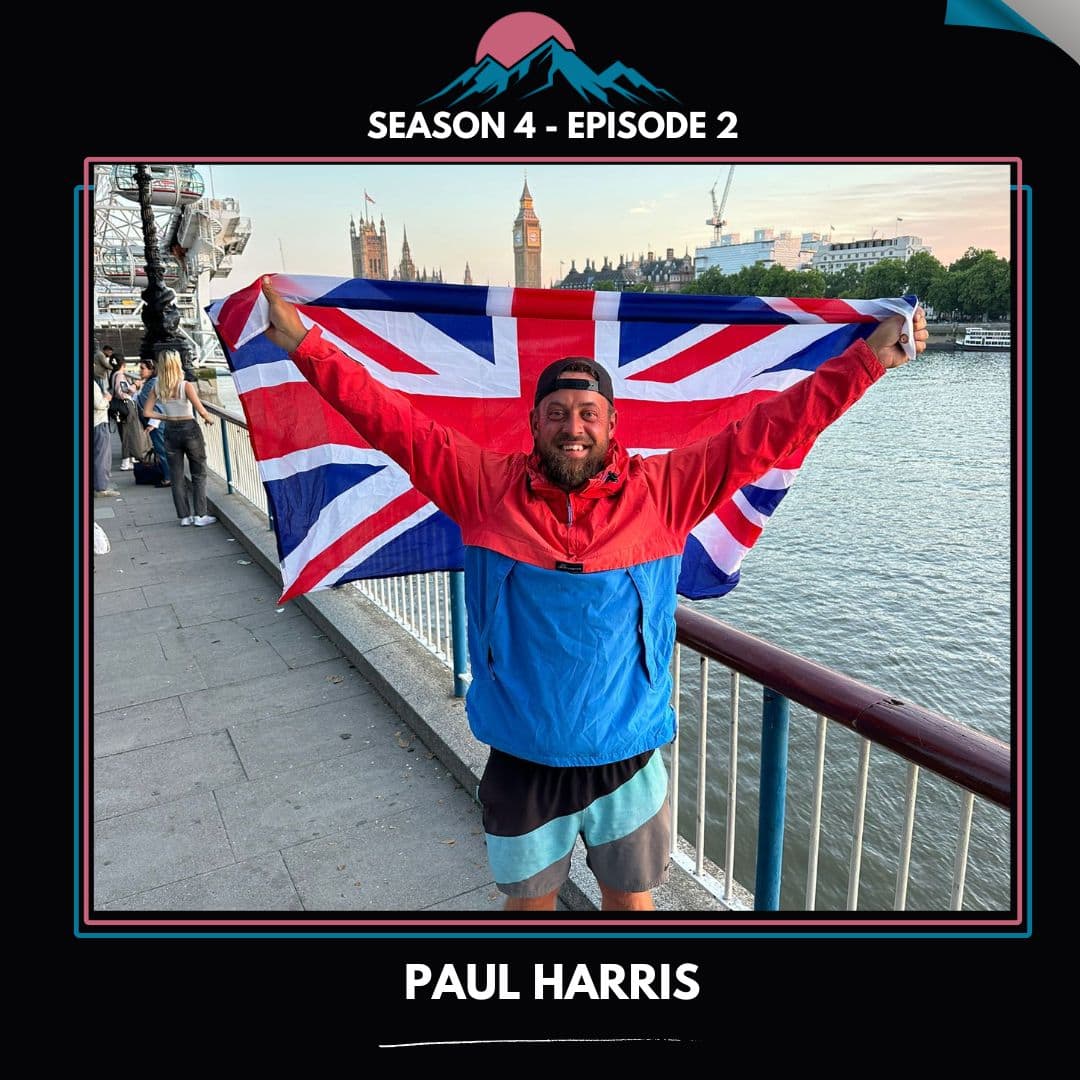
Today he’s known as the Warrior Walker. He’s walked the coastline of the UK twice — over 24,000 miles, more than the circumference of the Earth. He’s raised money for charity, built a community on Instagram, and shown thousands of people that no matter how far gone you feel, it’s never too late to step into a better story. This is part one of a two-part conversation.
From the Marines to Kabul.
Paul’s first posting after training was carrying coffins off planes at Faslane — the bodies of soldiers killed in Iraq. He was 19. It was a wake-up call. After his service he spent a week on a desert island for a reality TV show called Shipwrecked, then worked in Bournemouth, hating the sameness of it. His brother called with an offer: private security in Afghanistan. Paul flew to Thailand in February 2012, basing himself there and rotating six to eight weeks in Kabul, four weeks off. He was protecting NGOs — journalists, lawyers, charity workers — getting them from A to B in a city where sitting still could get you killed. He loved the work, the adrenaline, the fact he was doing something not many people do. But after two years, it started to mess with his mind. He’d wake up sweating in Thailand, unable to decompress. He drank, partied, burned the candle at both ends. One day he flew from Kabul to Dubai, saw the Burj Khalifa from the taxi, and couldn’t compute it. That was the moment he realised: enough’s enough. He was only doing it for the money, and money isn’t the be-all and end-all.
I was more comfortable in Afghanistan with the Taliban than I was singing to thirty schoolchildren.
— Paul Harris
Teaching in Thailand.
A friend suggested he become a teacher. Paul had no qualifications but decided to give it a go. He ended up teaching kindergarten in an international school for four years — kids aged one to twelve. Going from the Taliban to singing nursery rhymes was harder than he’d expected, but the children gave him something he hadn’t had in a long time: purpose. They were like thirty puppies, happy to see him every day. He was making more money than he had in the Marines, rent was cheap, and he thought he’d built his life. Then, a week’s notice: his visa was ending and he had to leave. It was September 2019. They said he could come back in six months. Six months on was March 2020. COVID hit. He never went back.
The panic attack.
Paul flew one way to London, moved in with his dad in Bournemouth, and hated every minute. He wouldn’t talk to anyone. He’d see friends on the high street and turn around. He worked in insurance and felt like a failure. In mid-December he had a panic attack — fifteen minutes of shaking, sweating, hyperventilating. He thought he was going to die. The first thing he said was, “I feel like a failure.” Then COVID happened. He started walking — marathons on his own along the Jurassic Coast. Walking gave him clarity, made him feel creative. One day his friend Rory sent him a message: “Bro, you need to walk around the UK and write a book about it.” That message changed everything.
That message was like a match, and my life was the flame, and you chuck it on this bonfire.
— Paul Harris
Setting off.
Three weeks later, Paul was on day one, step one. He couldn’t afford a tent. He had about 30 kilograms on his back, £300 in his bank, and no real plan. His dad told him he didn’t have to do it — he’d already proved himself. Paul said, “Yeah, but I need to prove it to myself.” His mate Tommy came to the start line and played “500 Miles” by The Proclaimers. Paul felt a hot flush, a thought: “Just step. You’re in the right place at the right time.” And he stepped off. He didn’t think anyone would care, but people did. They offered rooms, bought him hotel stays, donated kit and money. Instagram became his community, his family. He even met his partner there. On the first lap he walked 12,500 miles in 19 months. On the second he went the other way, raised money for charity, and finished in a year. He’s the first person to walk the UK coastline twice.
In this conversation.
We hear how Paul went from a tough upbringing to the Royal Marines, from carrying coffins to private security in Kabul, from teaching in Thailand to a mental health crisis in Bournemouth. We hear about the panic attack, the walking, the message from a friend, and the decision to step off with nothing but a bag and £300. We hear about the kindness of strangers, the science of walking, and the North Star of death — how Paul uses the memory of friends who’ve died to push himself through hard things. This is part one. Part two will take us deeper into the walk itself, the miles, the loneliness, the beauty, and what it means to keep going when you don’t know what’s ahead.
Call to adventure.
Don’t think, do. If you’ve got a thought that won’t leave you alone, act on it quickly — because if you wait too long, you won’t. And if you’re struggling, put your phone down, put some music on, go for a walk, and go see people in real life. Walking doesn’t discriminate. However heavy you are, literally or metaphorically, it helps.
About Paul.
Paul Harris is a former Royal Marine who served in Afghanistan, worked private security in Kabul, and taught kindergarten in Thailand before returning to the UK in 2019. In 2020 he set off to walk the entire coastline of the UK with £300 and no tent. He completed the first lap in 19 months, then walked it again in the opposite direction, raising money for charity and finishing in a year. He’s the first person to walk the UK coastline twice — over 24,000 miles in total, more than the circumference of the Earth. He’s known as the Warrior Walker.
That market in Kabul is years behind him now. The grenade launchers, the knives, the Taliban watching from the stalls. But the lesson stuck: sometimes you have to walk into the unknown to see what a place — or a life — is really about.